


For years, the cardboard display has remained one of the most widely used sales tools in retail stores. It is lightweight, relatively inexpensive, and offers immense design possibilities. Thanks to modern printing and structural technologies, it can effectively capture customer attention and boost product sales during promotional campaigns.
However, not every cardboard display will be equally effective. Its success depends on a well-designed structure, durability, and how well it is tailored to the product and the point of sale..
Where do cardboard displays work best?
Cardboard displays are most commonly used for promotional events, new product launches, and seasonal campaigns. Their design allows for the quick setup of displays tailored to a specific brand, product, and point of sale..
Cardboard displays work exceptionally well in, among other things:
- grocery stores,
- drugstores,
- home improvement stores,
- alcohol stores,
- sports stores,
- convenience store chains.
A major advantage is the ability to deploy them quickly across multiple locations simultaneously. Thanks to their low weight, ease of transport, and on-site assembly, they offer a convenient solution for campaigns conducted at numerous points of sale.
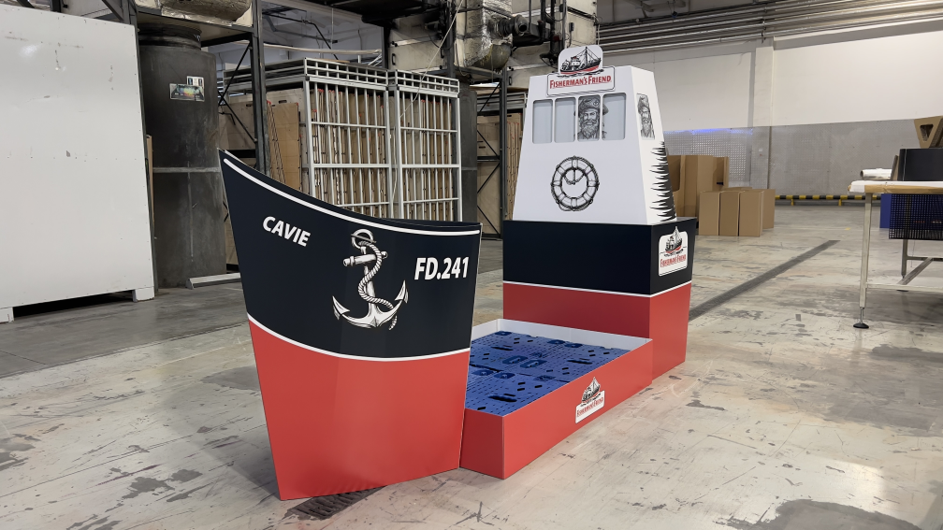
Is the cardboard display durable enough?
This is one of the most frequently asked questions. A well-designed cardboard display can easily withstand several weeks—or even several months—of intensive use under favorable conditions.
Its durability is primarily influenced by:
- type of cardboard used,
- number of layers,
- konstrukcja półek,
- sposób rozłożenia ciężaru,
- reinforcements used,
- method of using the display unit.
That is why the structural design is often more important than the thickness of the cardboard itself. Proper load distribution, well-designed shelves, and additional reinforcements make it possible to create a structure tailored to a specific product
In the case of heavier products, it is particularly important to conduct appropriate tests before commencing serial production.
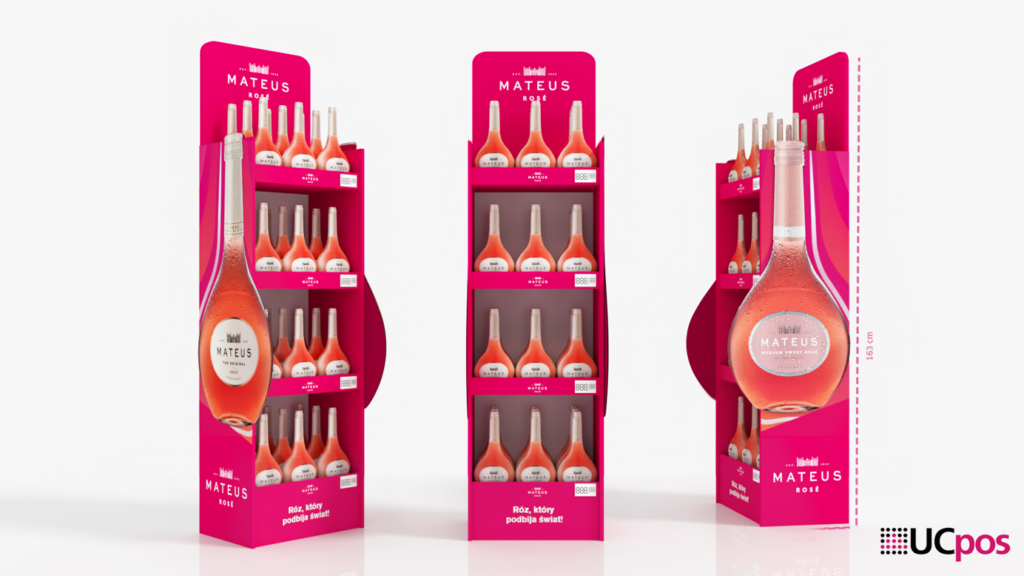
What possibilities does cardboard display design offer?
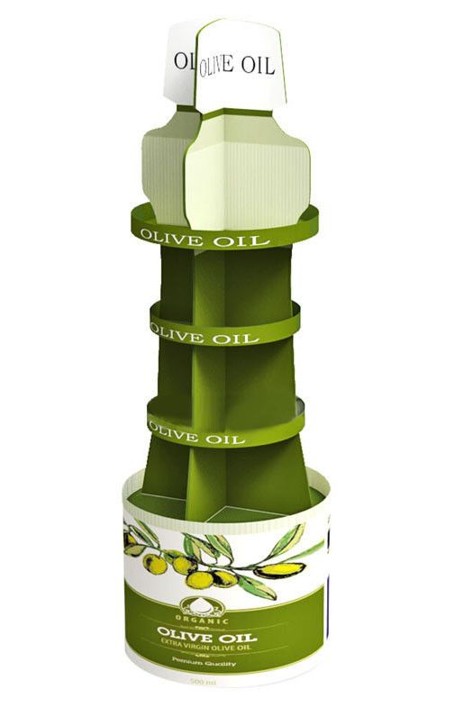
Modern technologies make it possible to create much more than just standard shelving units. A cardboard display can be designed as a distinctive element of an entire promotional campaign—one that attracts attention while simultaneously showcasing the product.
Display units may feature:
- non-standard shapes,
- spatial elements,
- cut-out product silhouettes,
- shelves tailored to specific packaging,
- spaces for marketing communication,
- additional decorative elements,
- interactive elements,
- LED lighting.
It is also possible to tailor the graphics, color scheme, and structural design to the brand’s visual identity. This turns the cardboard display into an integral part of the marketing campaign, rather than just a place to stock products
How much does a cardboard display stand cost?
The price of a cardboard display depends on many factors. Each project may have different requirements regarding construction, materials, graphics, and production methods; therefore, the cost is determined on an individual basis.
The factors with the greatest impact on the price are:
- display size,
- number of shelves,
- material used,
- thickness and type of cardboard,
- method of construction,
- print finishing,
- production batch size,
- packaging method,
- transport.
Producing larger batches significantly reduces the cost per display. Therefore, it is worth considering the planned scale of the campaign and the number of points of sale where the displays will be used as early as the design stage.
Why is the prototype so important?
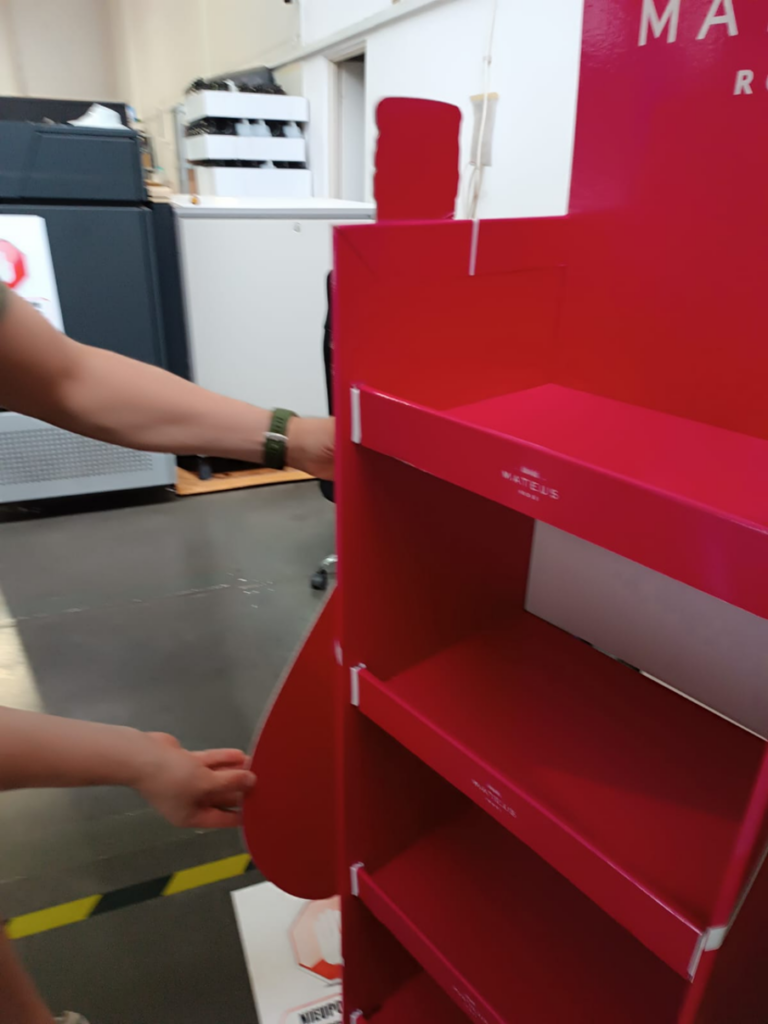
Even the best-prepared visualization cannot show every detail of the actual structure. Therefore, it is worth creating a prototype before starting mass production.
It allows you to check:
- structural stability,
- method of folding,
- shelf load capacity,
- product placement,
- matching the display to the packaging,
- ease of use,
- appearance of the structure in actual size.
This makes it possible to eliminate potential errors before full-scale production begins. The prototype also allows for an assessment of whether the display unit presents the products effectively and whether it will be convenient for store staff to use.
A well-designed cardboard display sells more.
A customer makes a purchasing decision in a matter of seconds. Therefore, the display should simultaneously attract attention, showcase the product, and make it easy to grab quickly.
A good display unit should:
-
attract attention
- present the product appropriately,
- present the product appropriately,
- display the price,
- provide the most important information,
- support brand communication,
- encourage a purchase.
Combining good graphic design with the right structure transforms a cardboard display into an effective sales tool, rather than just an advertising medium.
FAQ
How long can a cardboard display be used?
Most often ranging from a few weeks to several months, depending on the type of product, traffic volume, placement location, and the construction and materials used.
Czy ekspozytor kartonowy nadaje się do ciężkich produktów?
Yes. A well-designed structure and the right choice of cardboard allow for the display of heavier products as well, such as beverages, alcohol, or household chemicals. For heavier loads, the structure should be appropriately reinforced and tested before mass production begins..
Is it possible to produce a display in a custom shape?
Yes. A cardboard display can be tailored to the product, packaging, brand visual identity, or advertising campaign theme. It is also possible to incorporate three-dimensional elements, custom cutouts, and additional decorative features
Is a prototype produced before manufacturing?
Yes. In most projects, preparing a prototype allows for the verification of the design, ergonomics, stability, and product display method prior to the start of mass production.
Summary
At UC POS, we design and manufacture POS displays that combine aesthetics with functionality. Each design is created with consideration for actual in-store conditions, product display methods, and the convenience of both customers and staff.
We analyze the design, materials, intended use, and the location where the display will be deployed. As a result, the display not only looks good but, above all, effectively supports sales and brand communication.
Are you planning a campaign using cardboard displays?
Please send us product details, the planned number of displays, or campaign specifications. We will prepare a structural proposal, select the appropriate material, and provide a production quote tailored to the scale of the project.
At UC POS, we design, prototype, and manufacture POS displays made from metal, wood, MDF, acrylic, plastics, and cardboard. Right from the conceptual stage, we analyze ergonomics, structural stability, and in-store placement to ensure the display is safe, durable, and effective at driving sales.