


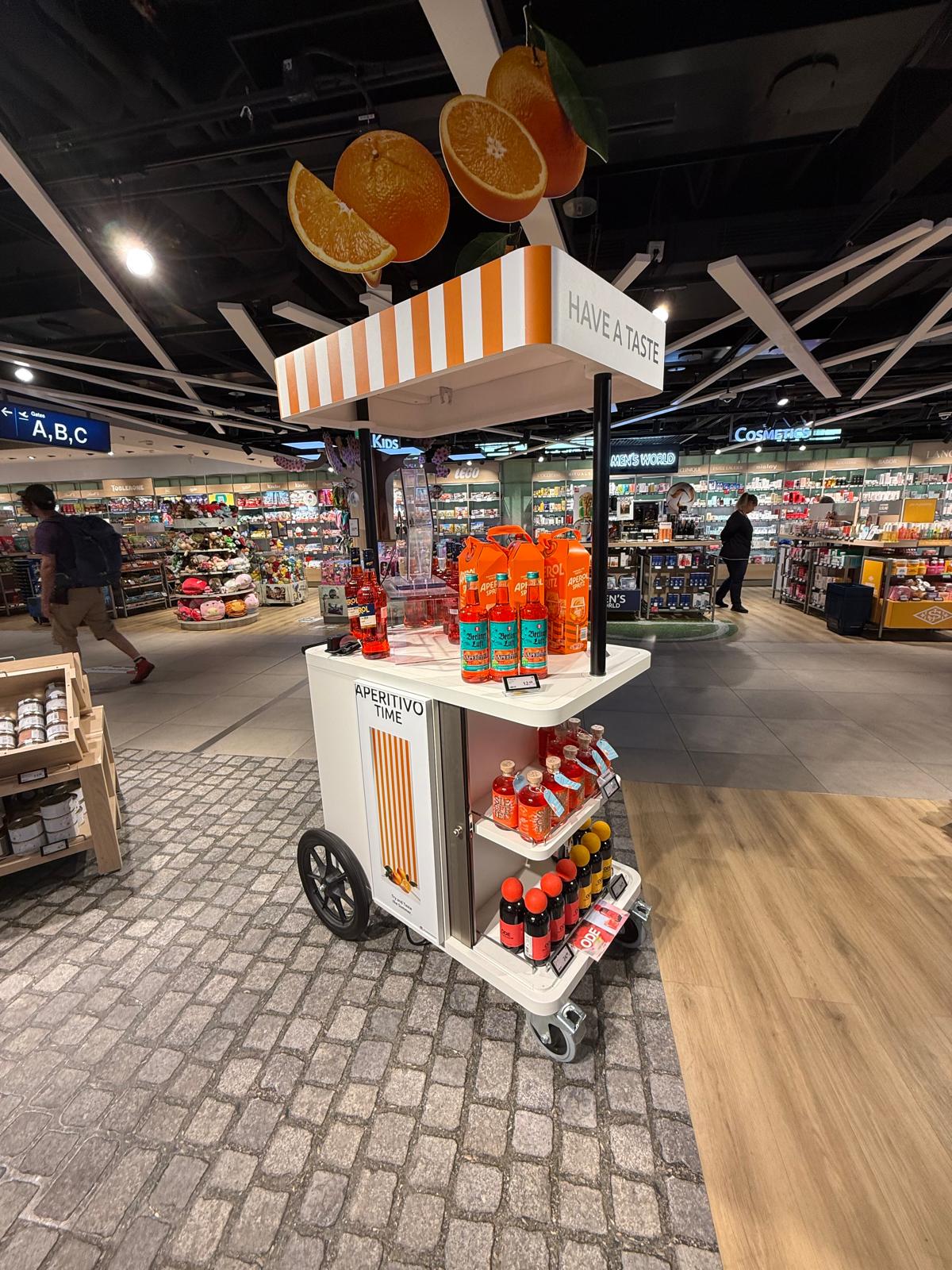
A permanent POS display should remain in use far longer than a single marketing campaign. Yet, many displays are designed solely with the current collection, a specific product, or a single brand message in mind. After a few months, the structure itself may still be in excellent condition; however, the graphics become outdated, product packaging changes, or the brand launches a new campaign.
As a result, a functional display unit ceases to meet current needs.
Therefore, a good design for a permanent POS display should account for future changes right from the conceptual stage. Modular construction, interchangeable components, ease of maintenance, and expandability are key factors. This allows a single display to support sales across multiple campaigns, so the brand does not have to invest in a new stand every time.
Permanent POS displays should be designed for more than one campaign.
The most expensive component of a permanent exhibition is usually its main structure. That is precisely why this element should remain unchanged for as long as possible.
On the other hand, it is much easier and cheaper to update:
- graphics,
- marketing communication,
- promotional elements,
- method of product presentation,
- lightning,
- multimedia,
- price markings.
This solution allows the permanent display unit to be adapted for subsequent campaigns without having to manufacture the entire structure from scratch. Consequently, the brand can launch a new collection, change packaging, or refresh its visual identity while retaining the same display base..
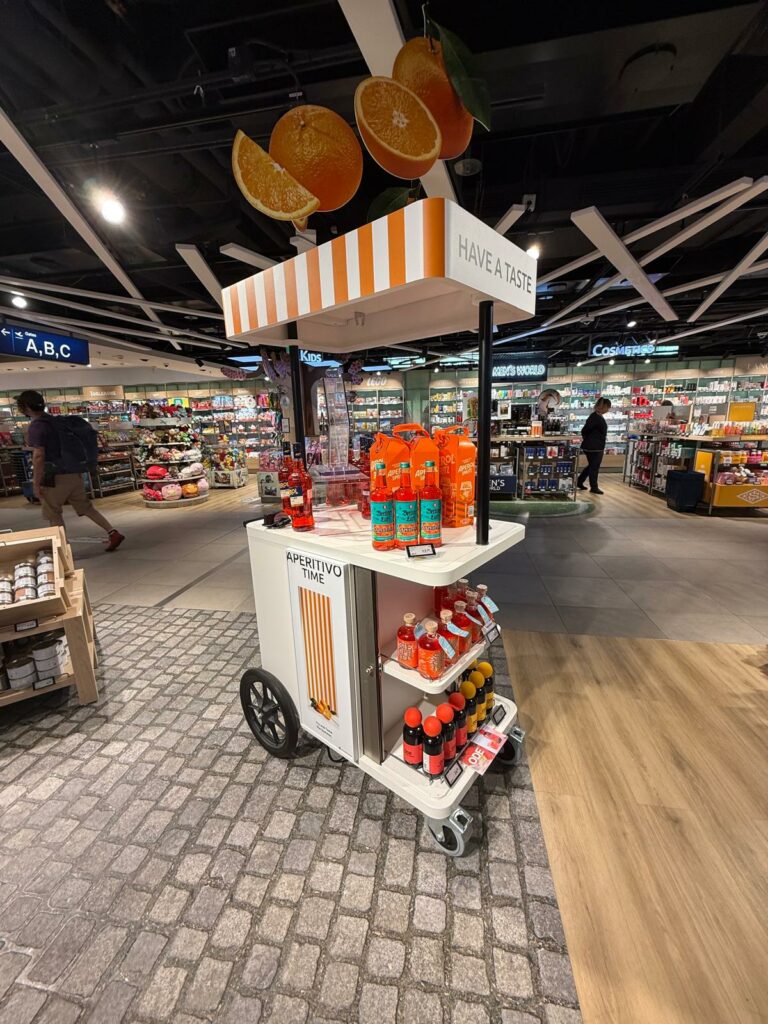
A modular permanent POS display offers greater flexibility.
Product ranges rarely remain unchanged for several years. New variants appear, packaging changes, and collections are regularly expanded. Therefore, the display unit’s design should allow for easy adjustment of the display space.
In permanent POS projects, it is worth using:
- adjustable shelves,
- interchangeable panels,
- modular panels,
- interchangeable fronts,
- system-based graphic mounts,
- components to be dismantled,
- possibility of adding further modules.
This allows a single display unit to showcase various collections, seasonal products, and limited editions. Moreover, the modular design facilitates future store layout changes; instead of designing a new stand, the existing display can be modified to suit new requirements.
Replaceable POS graphics allow for a quick refresh of the display.
Marketing communication changes faster than the structure of the display itself. Therefore, the graphics should be among the elements that can be replaced without complex disassembly.
It is worth anticipating the following as early as the design stage:
- magnetic frames,
- textile cassettes,
- slide-in panels,
- interchangeable fronts,
- graphics installed without specialized tools.
Such solutions allow the display to be quickly prepared for a new campaign. At the same time, replacing the graphics costs significantly less than producing a new permanent stand. Consequently, the brand can regularly update its messaging while retaining the same durable structure. These solutions work particularly well in the beauty and electronics sectors, the premium segment, liquor stores, and duty-free zones.
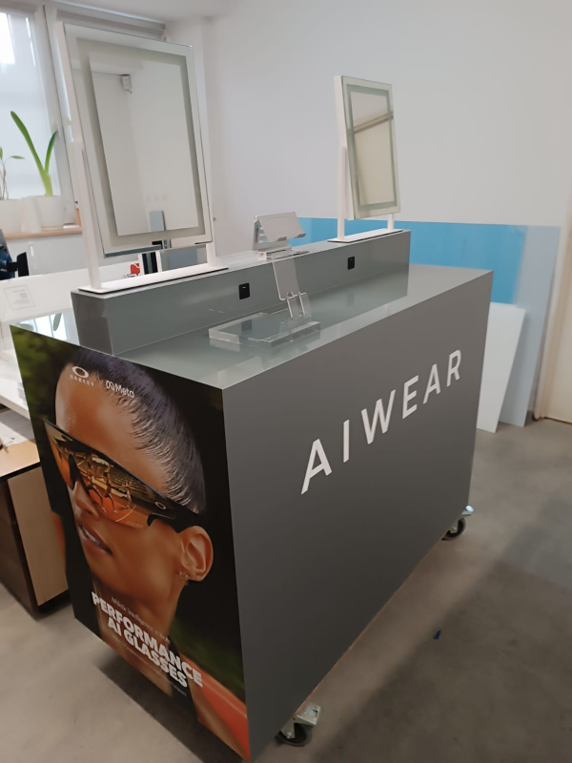
The design of permanent POS displays should take future products into account.
One common mistake is designing shelves and holders that are perfectly tailored solely to the current product. Initially, this approach works very well. However, problems may arise when the packaging changes next. A new bottle might be taller, or a cosmetic package might become wider. Similarly, an electronics manufacturer might introduce a device with completely different dimensions.
Therefore, a good POS design should allow for a certain degree of flexibility. Adjustable shelves, universal mounts, and interchangeable components make it possible to adapt the display to new products without rebuilding the entire structure.
This is particularly important for permanent POS displays, which have a much longer lifecycle than a single campaign.
It is worth planning POS servicing even before production.
A permanent display unit can remain in use in a store for many years. During this time, customers will handle it, while staff will regularly restock products and clean its surfaces. Consequently, individual components may naturally wear out.
That is why it is worth answering a few questions as early as the design stage:
- Can the damaged part be replaced separately?
- What is the access to natural light like?
- Can the screen be removed without dismantling the entire structure?
- Is it possible to order a single panel?
- Is access to electronics easy?
- Czy ekspozytor można szybko przygotować do serwisu?
The easier it is to replace individual parts, the longer the entire permanent POS display can remain in good condition. Well-planned maintenance also reduces operating costs; instead of replacing the entire stand, only a single element can be repaired or replaced.
A durable POS display must be prepared for transport.
Design is important, but logistics cannot be overlooked during the design process. Even a visually attractive display can incur high costs if its transport or assembly is complicated.
Therefore, the design should take into account:
- possibility of division into smaller modules,
- easy disassembly,
- standard transport dimensions,
- easy installation at the point of sale,
- possibility of reassembly,
- relocation between stores.
This allows the permanent display to be moved to another point of sale or reused for a future campaign. This is particularly important for brands with multiple locations.
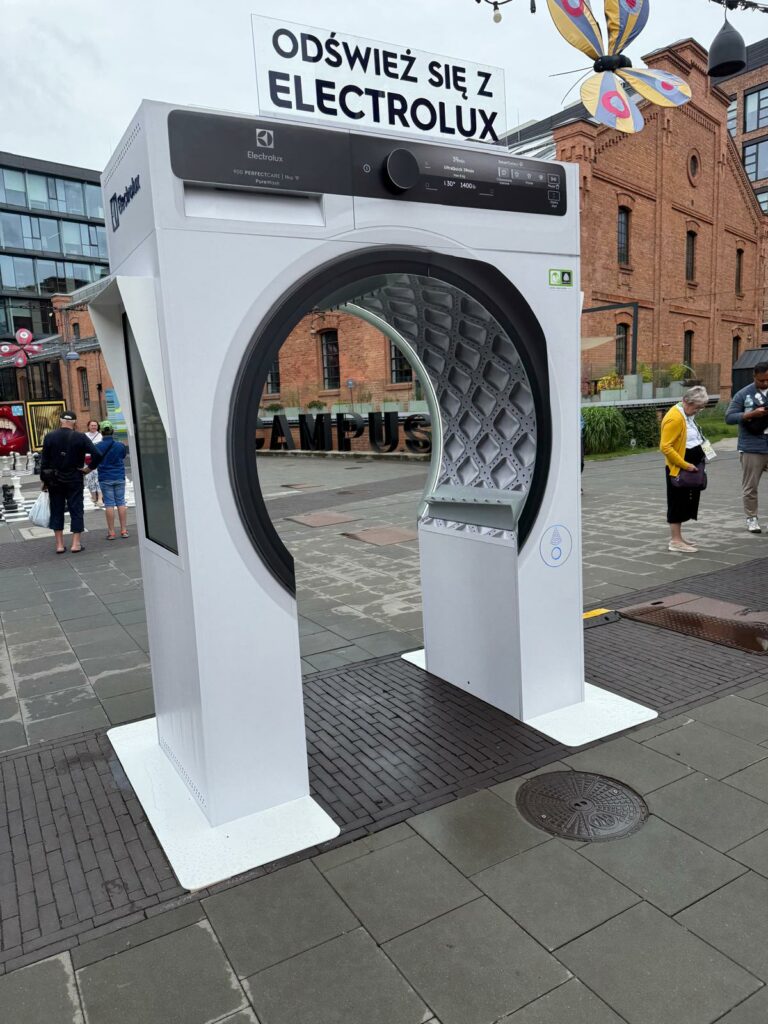
A neutral design offers more possibilities.
Not every POS element needs to directly tie into a single campaign. For permanent displays, a durable base consistent with the brand identity, combined with interchangeable promotional elements, often works better.
For instance, it could be a metal or wooden structure featuring the company’s signature color scheme. It is then complemented with graphics that align with the current campaign. This approach maintains brand recognition while offering a great deal of flexibility.
A new campaign does not necessarily mean replacing the entire display.
A modern permanent POS display can be expanded.
A good permanent display should evolve alongside the brand. That is why it is worth planning for future expansion right from the start.
Over time, the following can be added to the structure:
- LCD screens,
- LED backlighting,
- additional shelves,
- new product modules,
- sensors,
- interactive elements,
- multimedia,
- additional visual communication elements.
Thanks to this, the stand can meet the brand’s current needs even after several years. There is no need to replace the entire display simply because the company wants to implement new technology or showcase a larger number of products.
How can the lifecycle of permanent POS be extended?
The long service life of a display unit does not depend solely on the quality of the materials used. The design approach and the potential for future upgrades are equally important.
To ensure a permanent POS display lasts as long as possible, it is worth paying attention to:
- durable base structure,
- easy graphics replacement,
- serviceability,
- modular elements,
- adjustable shelves,
- access to electronics,
- possibility of later expansion,
- a simple relocation.
An exhibition designed in this way can be repeatedly adapted to new requirements. As a result, the brand makes better use of the budget allocated for retail space fit-out.
The POS project should answer the question: what will the situation be in two years?
When designing permanent POS displays, it is worth looking beyond the immediate rollout.
How might the products change?
Does the brand plan to expand its product range?
Will a new visual identity be introduced in the future?
Will it be possible to add a screen to the stand?
Will it be possible to move the display unit to another store?
The answers to these questions influence the design as early as the design stage.
If a POS system can be easily updated, serviced, and expanded, its total cost of ownership can be significantly lower.
That is precisely why a well-designed permanent POS display should be treated as a long-term investment rather than an element of a single campaign.
FAQ – Permanent POS
Jak długo może być wykorzystywany POS permanentny?
Permanent POS displays are designed for long-term use. Their lifecycle depends on materials, intensity of use, in-store conditions, and serviceability. A well-constructed unit can serve multiple successive campaigns.
Is it possible to change the graphic without replacing the entire display unit?
Yes. Interchangeable inserts, panels, facings, and mounting systems allow for the quick updating of marketing messaging. This eliminates the need to produce a new stand every time the campaign changes.
What is a permanent modular POS unit?
A modular permanent POS display consists of components that can be replaced, expanded, or reconfigured. This allows the display to be adapted to new products and campaigns without building the entire structure from scratch.
What materials are used to produce permanent POS displays?
Materials such as metal, wood, MDF, acrylic, and plastics are used to manufacture durable displays. Multiple materials can also be combined in a single design. The choice depends on the visual appearance, load requirements, intended location, and expected durability.
Is it worth designing POS materials with future campaigns in mind?
Yes. This allows the brand to change graphics, products, and communication elements without investing in a new structure. In the long run, this reduces the costs of future rollouts..
Can a permanent POS display be expanded later?
Yes, if that possibility was factored into the design. Screens, LED lighting, shelves, and additional display elements, among other things, can be added to the modular structure at a later stage.
Permanent POS as an investment for multiple campaigns
At UC POS, we design and manufacture POS displays tailored to both the product and the actual conditions at the point of sale.
We analyze the structure’s usage, product display, ergonomics, stability, and potential for future upgrades.
For permanent POS displays, we pay special attention to durability, replaceable components, ease of servicing, and expandability.
Thanks to this, the display can support sales not only during the initial campaign but also during subsequent rollouts.
Do you want to design a permanent POS display for multiple campaigns?
Tell us about your product, the retail environment, and your brand development plans. We will help design a custom POS display that can be updated, expanded, and adapted for future campaigns. At UC POS, we design, prototype, and manufacture displays using metal, wood, MDF, acrylic, plastics, and cardboard.
We analyze ergonomics, stability, product placement, and in-store conditions right from the conceptual stage. This ensures the finished structure is durable, functional, and aligned with the brand’s sales objectives.