


The client often asks about the material right at the beginning of the project.
Is it better to make the display stand out of wood? Or perhaps plywood? Will MDF be durable enough?
These are understandable questions, but in practice, there is rarely a single right answer. The material should be determined by the installation site, the intended use, the budget, and the project’s planned lifespan.
In many projects, we achieve the best results not by selecting a single material, but through the deliberate combination of several technologies.
It is precisely at this stage that a display unit is created that looks attractive, is durable, and remains cost-effective.
There is no single best material for producing POS displays.
The biggest mistake is choosing a material based solely on price or appearance.
A good design begins with an analysis of the product, the display location, the intended duration of use, and the method of transport.
Only later do we select the materials that best meet the project’s requirements.
Modern POS displays increasingly combine several materials, with each serving a different structural function.
Metal can provide stability, MDF can ensure an aesthetic finish, plywood can enhance durability, and acrylic or glass can help showcase the product effectively.
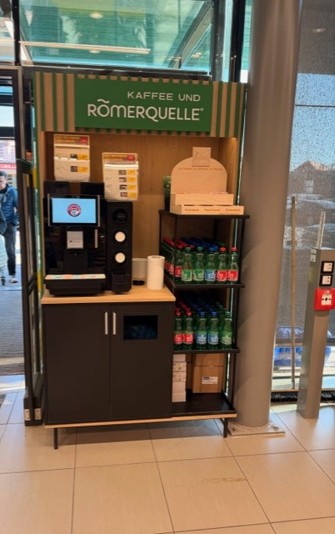
MDF display stand. When is it the best choice?
MDF is one of the most frequently used materials in the production of permanent displays.
It enables the achievement of very smooth surfaces, precise milling, and high-quality lacquering.
It works perfectly in the beauty industry, electronics, showrooms, and premium store fittings.
The main advantages of MDF are:
- perfect surfaces for varnish,
- easy CNC machining,
- possibility of making milled details,
- stylish LED lighting,
- high-quality finish,
- great design freedom.
MDF performs well wherever the appearance of the display and the ability to achieve precise details are crucial.
However, it should be remembered that this material will not always be the best solution for very frequent transport or in areas exposed to severe mechanical damage.
Plywood. When is it worth choosing?
Plywood is more resistant to mechanical damage than MDF and performs very well in situations where the display will be frequently transported or subjected to heavy use.
It is also increasingly being used by premium brands that want to emphasize the natural character of the product.
The greatest advantages of plywood are:
- high strength,
- lower susceptibility to damage,
- natural look,
- good durability during transport,
- possibility of multiple installation,
- relatively low mass combined with good rigidity.
Plywood works well for mobile structures, trade show displays, promotional stands, and projects designed to be repeatedly assembled and transported.
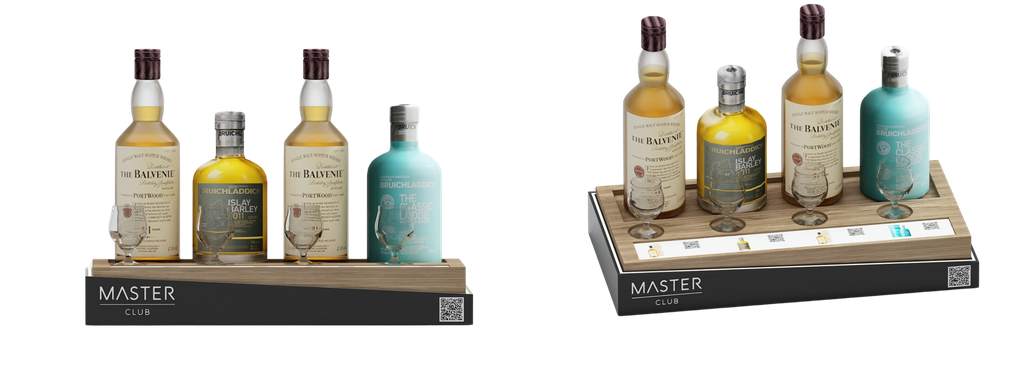
Solid wood. A premium look, but not always the best choice.
Natural wood looks exceptional, yet its use is not always economically justified.
It is heavier, more expensive, and more demanding to manufacture.
Works best in:
- showrooms,
- premium shops
- alcohol displays,
- boutiques,
- tasting areas,
- projects requiring an exceptional finish.
Solid wood can powerfully accentuate the character of a brand and its products. At the same time, it requires proper protection and must account for the material’s natural movement.
For this reason, in many projects, instead of constructing the entire structure from wood, it is used only for the most visible elements.
MDF, plywood, or solid wood? Key differences
Each of these materials has different properties.
MDF works best where a smooth surface, lacquering, and precise milling are important.
Plywood offers greater mechanical strength and withstands transport well.
Solid wood offers a distinctive, premium look, but it is typically more expensive and more demanding to manufacture.
Therefore, the choice should depend on:
- planned period of use,
- intensity of exploitation,
- installation locations,
- transport frequencies,
- the expected visual effect,
- budget,
- type of products displayed.
The best displays are created by combining several materials.
The most functional designs are very rarely made from a single material.
Metal provides the structure.
MDF provides ideal surfaces.
Plywood increases resistance.
Akryl eksponuje produkt.
Glass adds lightness.
LED builds visibility.
This approach makes it possible to achieve a better visual effect, improve durability, and optimize production costs.
Therefore, not every part of the display unit needs to be made of the same material.
It is far more important to apply the right solution exactly where it is needed.
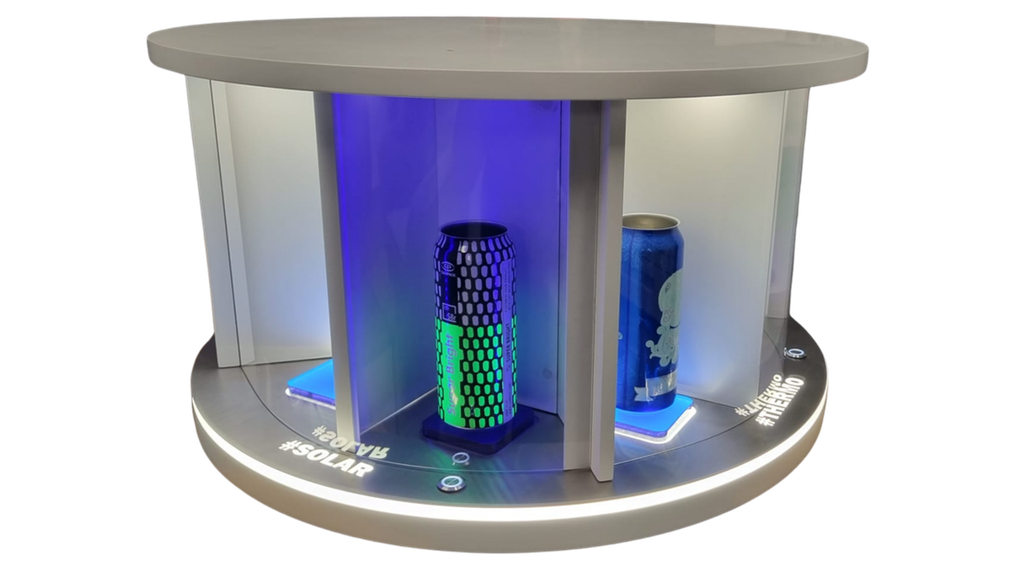
The material affects not only the production cost.
The cost of materials is only a part of the entire project.
Also significant are:
- production time,
- varnishing,
- transport,
- weight of the display unit,
- montaż,
- serviceability,
- packing,
- storage
- reusability.
It sometimes happens that a more expensive material allows for a reduction in the total implementation cost, thanks to easier production or cheaper logistics.
That is why it is not worth looking solely at the price per square meter of MDF, plywood, or wood.
The total cost of producing and using the display unit is far more important.
The weight of the display unit matters for transport.
The material also affects the weight of the entire structure.
This is particularly important for large-scale rollouts, where a large number of display stands need to be delivered to dozens or even hundreds of stores.
A heavier structure means:
- higher transport cost,
- more difficult to carry in,
- stricter packaging requirements,
- more complex assembly,
- higher relocation costs.
That is why, at times, a lighter material or a combination of several different materials yields a much better economic result than a single heavy structure.
The finish affects the perception of the entire display unit.
The same material can look completely different depending on the finish applied.
MDF can be lacquered to a matte, semi-matte, or high-gloss finish.
Plywood can be left in its natural state, oiled, varnished, or stained.
The wood can be brushed, stained, oiled, or protected with varnish.
Thanks to this, the appearance of the display unit can be precisely tailored to the brand identity.
The structural material therefore need not limit the visual design.
The materials should be suited to the conditions of use.
A display unit placed in a luxury boutique will operate under completely different conditions than a stand in a home improvement store or a convenience store.
Therefore, the material should be matched to the actual environment.
It is worth considering:
- customer traffic intensity,
- product replenishment frequency,
- possibility of contact with moisture,
- risk of impact,
- cleaning method,
- shelf load,
- transport frequency.
Only after analyzing these factors is it possible to select a solution that will be sufficiently durable.
It is worth designing the display unit with future projects in mind.
A permanent display unit often remains in use for many years.
Therefore, it is worth considering the possibility at the design stage:
- graphic exchanges,
- refreshing the communication,
- shelf replacements,
- reusing the structure during subsequent campaigns,
- easy transport,
- easy to install,
- replacement of individual components.
This approach extends the lifespan of the display unit and reduces the costs of future rollouts.
If part of the structure gets damaged, there is no need to manufacture the entire stand from scratch.
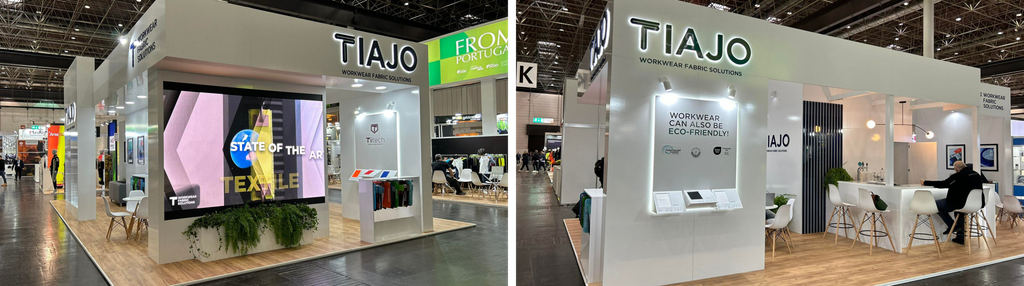
How to choose the material for a POS display?
Before making a decision, it is worth answering a few basic questions.
How long is the display unit intended to be used?
Will it be transported frequently?
How heavy will the products on the shelves be?
Is a natural look more important, or a perfectly smooth finish?
Will the structure be exposed to moisture or frequent cleaning?
Is the display unit intended to be reconfigured or used in future campaigns?
The answers to these questions make it possible to select the material much more effectively than simply comparing the prices of MDF, plywood, and solid wood.
Good design uses material where it is truly needed.
In practice, the best results are achieved by designing structures without being tied to a single material.
Metal can provide stability.
Plywood for components subject to frequent assembly.
MDF for lacquered surfaces.
Acrylic for product display.
Wood for premium items.
This approach makes it possible to create a display unit that is durable, attractive, and cost-optimized.
Summary
The selection of material should not begin with the question of whether MDF, plywood, or wood would be better.
It is far more important to determine the display unit’s function, conditions of use, and total implementation cost.
In practice, the best results are achieved by combining different materials that complement each other’s properties.
A good display unit is not made of a single material.
It is made of the right materials, used in the right places.
At UC POS, we design and manufacture POS displays that combine aesthetics with functionality.
Each project is developed with consideration for the store’s actual conditions, product display methods, and the comfort of both customers and staff.
Thanks to this, the display not only looks good but, above all, effectively boosts sales.
Not sure which material will be best for your project?
Send us a product description, a preliminary design, or a visualization.
We will advise you on whether MDF, plywood, solid wood, or a structure combining several materials would work best.
We will also demonstrate how the selected solution can impact production costs, logistics, assembly, and the durability of the display.
At UC POS, we design, prototype, and manufacture POS displays made of metal, wood, MDF, acrylic, plastics, and cardboard.
As early as the conceptual stage, we analyze ergonomics, structural stability, and in-store placement to ensure the display is safe, durable, and effective at driving sales..