


A well-designed retail island captures customer attention, enhances product visibility, and boosts sales. However, a challenge arises when the cost of transporting the display begins to account for a significant portion of the overall project budget. In practice, expenses related to storage, transport, and assembly can be comparable to—or, in some cases, even exceed—the cost of manufacturing the display itself. Fortunately, many of these costs can be mitigated during the design phase. It is simply a matter of considering not only how the island will look in the store, but also how it will be packed, transported, and assembled.
Why is the transport of retail kiosks so expensive?
The cost of transporting a retail kiosk depends on more than just its weight. The dimensions of the structure and the way individual components are prepared for shipment also play a significant role. Key factors affecting logistics costs include:
- Transport volume of the structure.
- Number of pallets required to transport the display.
- Height of the packed components.
- Possibility of stacking and nesting components.
- Number of shipments required.
- Time required for assembly of the island display at the point of sale.
It can happen that two nearly identical retail kiosks incur similar production costs, yet one of them takes up twice as much space in a delivery truck. As a result, the total cost of the project can increase significantly.
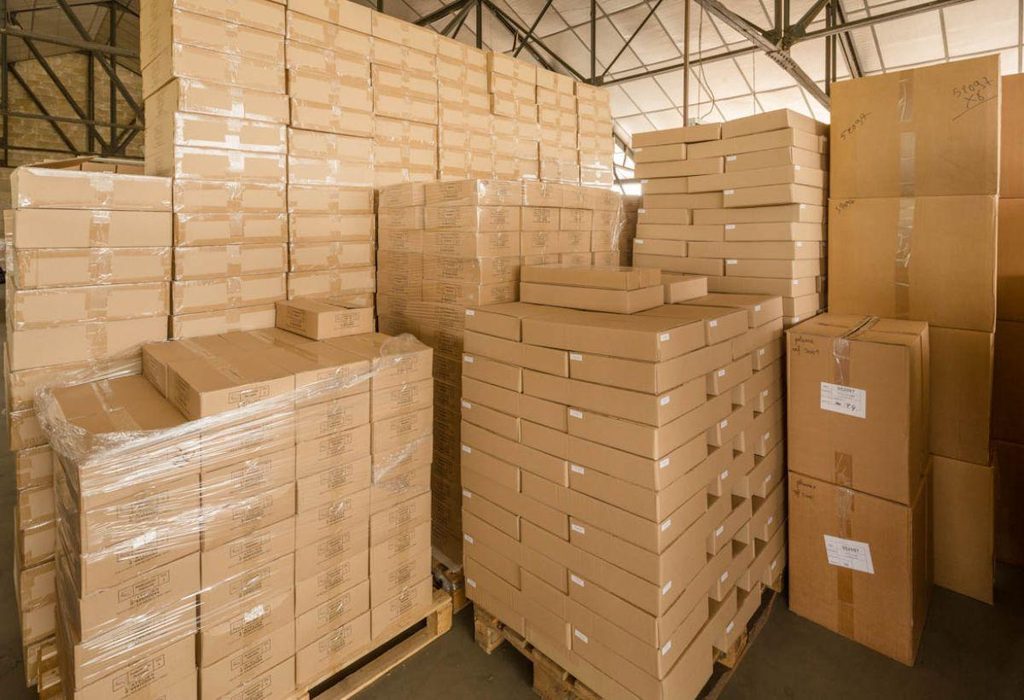
Flat-pack design allows for significant cost reduction.
One of the most effective ways to optimize transport is by using a “flat pack” design. This solution involves designing a retail kiosk in such a way that it can be transported as a set of flat, properly secured components. This approach offers numerous benefits:
- More display units can fit onto a single pallet.
- The number of required shipments is reduced.
- Storage costs can be lower.
- Transporting displays between countries becomes easier.
- In-store assembly can be faster and more efficient.
A well-designed flat-pack retail kiosk combines compact transport dimensions with an attractive appearance in its final, assembled form. As a result, logistical savings do not have to come at the expense of aesthetics.
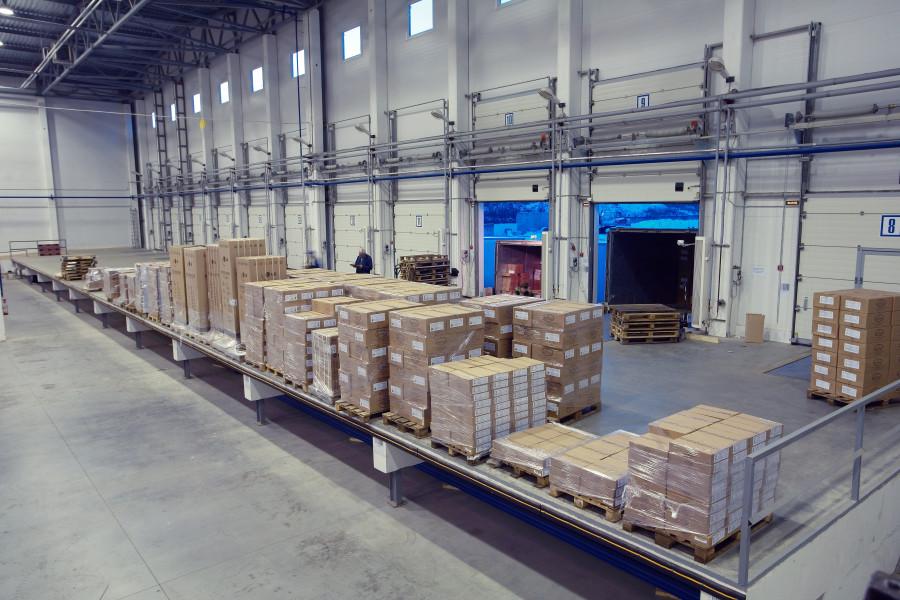
A designer should think like a logistician
Designing a retail kiosk goes beyond creating an attractive 3D model. It is equally important to anticipate the entire logistics process—from production all the way to installation at the point of sale. As early as the structural design phase, it is worth verifying:
- How many items can fit on a single pallet?
- Can the individual parts be stacked in layers?
- How should the components be protected against damage?
- How long will it take to unpack the display?
- Does assembly require any specialized tools?
Every additional minute spent on assembly can increase implementation costs, especially for campaigns involving dozens or hundreds of points of sale. Therefore, design optimization should encompass both the method of transporting components and the process of assembling them.
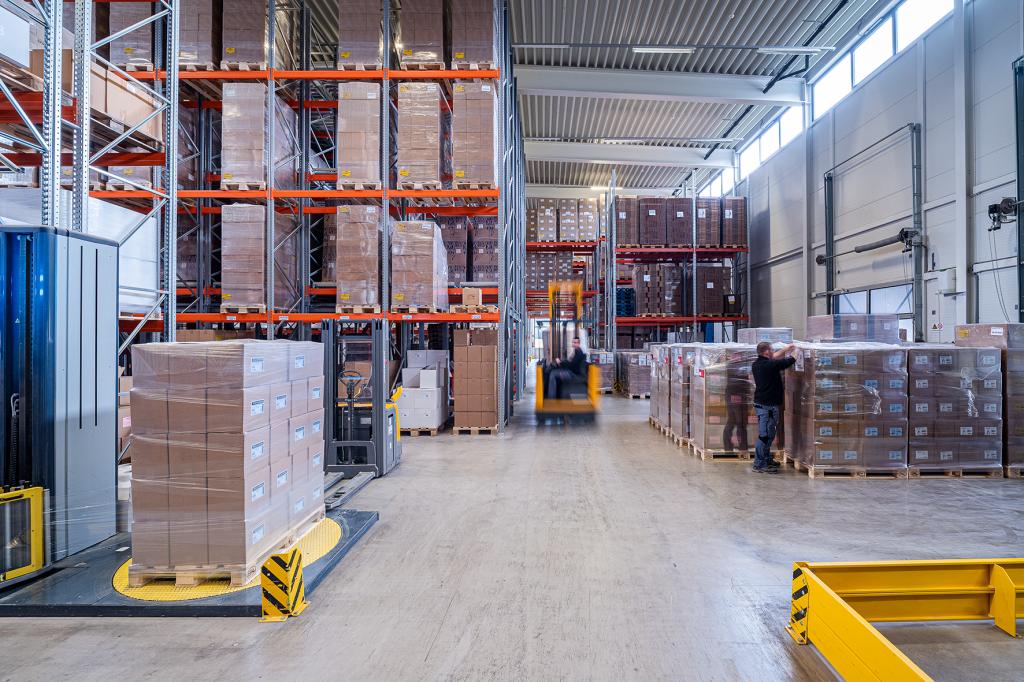
Smaller volume does not mean weaker exposure
One of the most common myths is the belief that a retail kiosk transported in separate parts must be less stable or less visually appealing. Modern POS (point-of-sale) systems employ design solutions that successfully combine functionality, durability, and aesthetics. These include, among others:
- Hidden component connection systems.
- Practical mounting latches.
- Lightweight and durable aluminum profiles.
- Modular structural elements.
- Modern composite materials.
A well-designed retail kiosk can look just as impressive as a structure transported as a single, complete unit. Furthermore, a modular design often makes it easier to reconfigure the layout or repurpose the display at a later stage.
Packaging is part of the retail island project
Professional design of retail kiosks should also encompass methods for securing all components during storage and transport. Most commonly, the following are used:
- Individual protective spacers.
- Foam padding to safeguard delicate components.
- Assembly sequence markings.
- Numbering of individual parts.
- Clear assembly instructions.
Proper packaging reduces the risk of damage, limits the number of complaints, and streamlines the assembly of displays. This is particularly important for retail islands that include decorative elements, LED lighting, or surfaces prone to scratching.
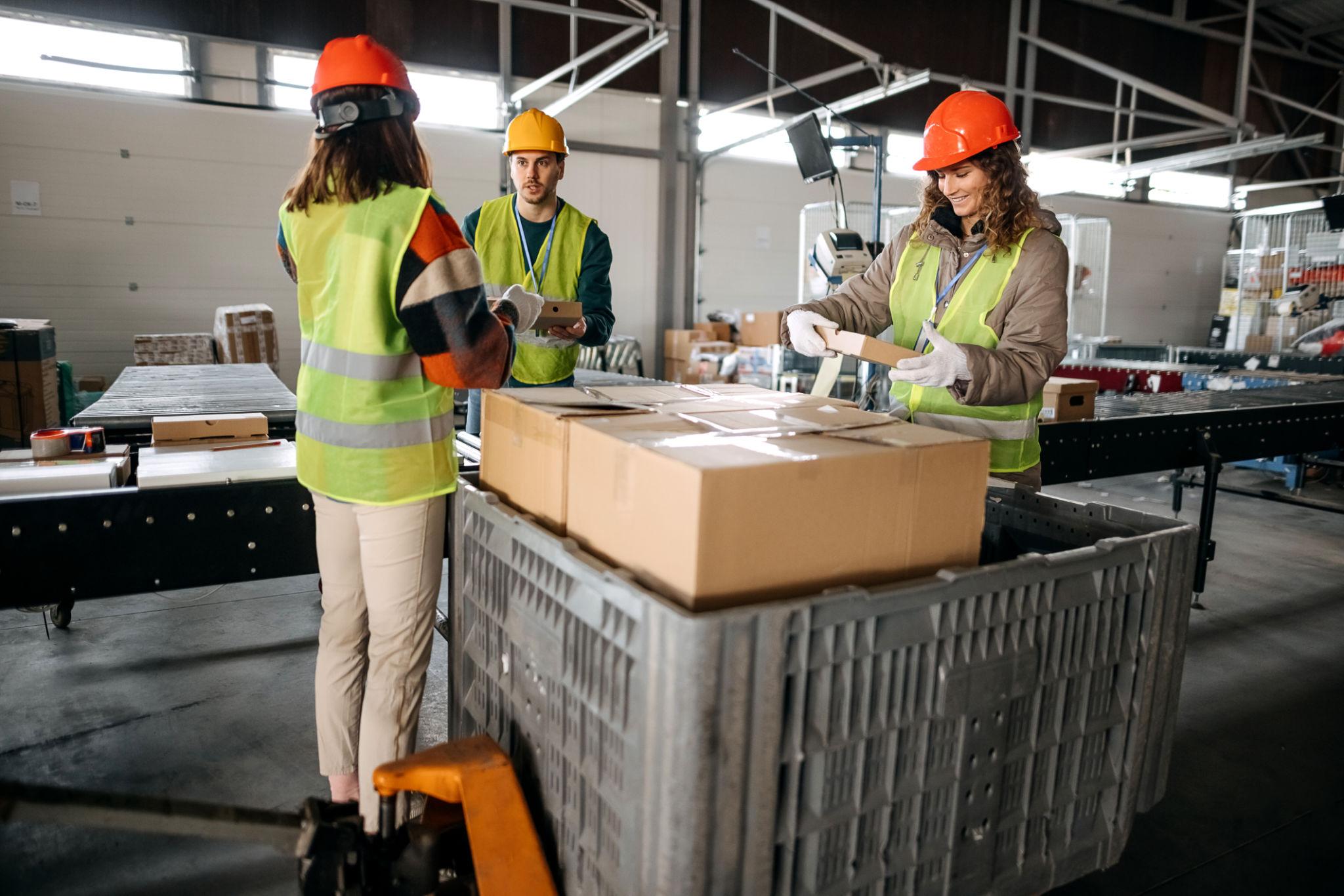
Proper packaging reduces the risk of damage, limits the number of complaints, and streamlines the assembly of displays. This is particularly important for retail islands that include decorative elements, LED lighting, or surfaces prone to scratching.
A retail kiosk is rarely used for just a single promotional event. Many such structures are utilized in successive sales campaigns and frequently change locations. These displays can be:
- Transferred between stores.
- Stored between campaigns.
- Reused during subsequent promotions.
- Shipped to other countries or retail chains.
Therefore, it is worth designing islands with the possibility of repeated assembly, disassembly, and transport in mind. A modular structure also allows for the easier replacement of specific graphic or product elements. As a result, a single island can be used for several different campaigns without the need to produce an entirely new display.
Most common mistakes that increase the transport costs of retail kiosks
Even a visually attractive retail kiosk can generate unnecessary expenses if logistical considerations are overlooked during the design phase. Some of the most common mistakes include:
- Designing structures that cannot be disassembled into smaller components.
- An excessive number of custom-made components.
- Lack of shared modules that could be used across different displays.
- Inefficient use of pallet space.
- Assembly that is overly complex and time-consuming.
- Absence of a packing plan during the design phase.
These errors can significantly increase transport and implementation costs, especially when fulfilling large orders. This is precisely why logistics analysis should be an integral part of the design process for a retail kiosk.
Summary – how to effectively reduce the transport costs for a retail kiosk?
Lower transport costs do not necessarily have to come from negotiating rates with a carrier. Very often, the greatest savings are achieved through the smart design of the structure itself. The earlier that logistics considerations are factored into the design of a retail island or pallet display, the greater the potential for cost optimization—without compromising the visual impact within the store. At UC POS, we design retail islands and pallet displays with a focus not only on aesthetics but also on production, packaging, transport, and assembly. In this way, we help our clients reduce logistics costs while maintaining high-quality craftsmanship and an attractive product presentation at the point of sale.
Optimize the logistics of your retail kiosk
Do you have a design ready and are wondering if you can reduce its transport costs? At UC POS, we design and manufacture retail kiosks and pallet displays, utilizing flat-pack solutions, modular structures, and optimized packaging systems. We analyze the entire process—from design and production through logistics, all the way to in-store assembly.
Contact UC POS to find out how we can help you reduce the costs of transporting displays, without compromising on their appearance or functionality.