


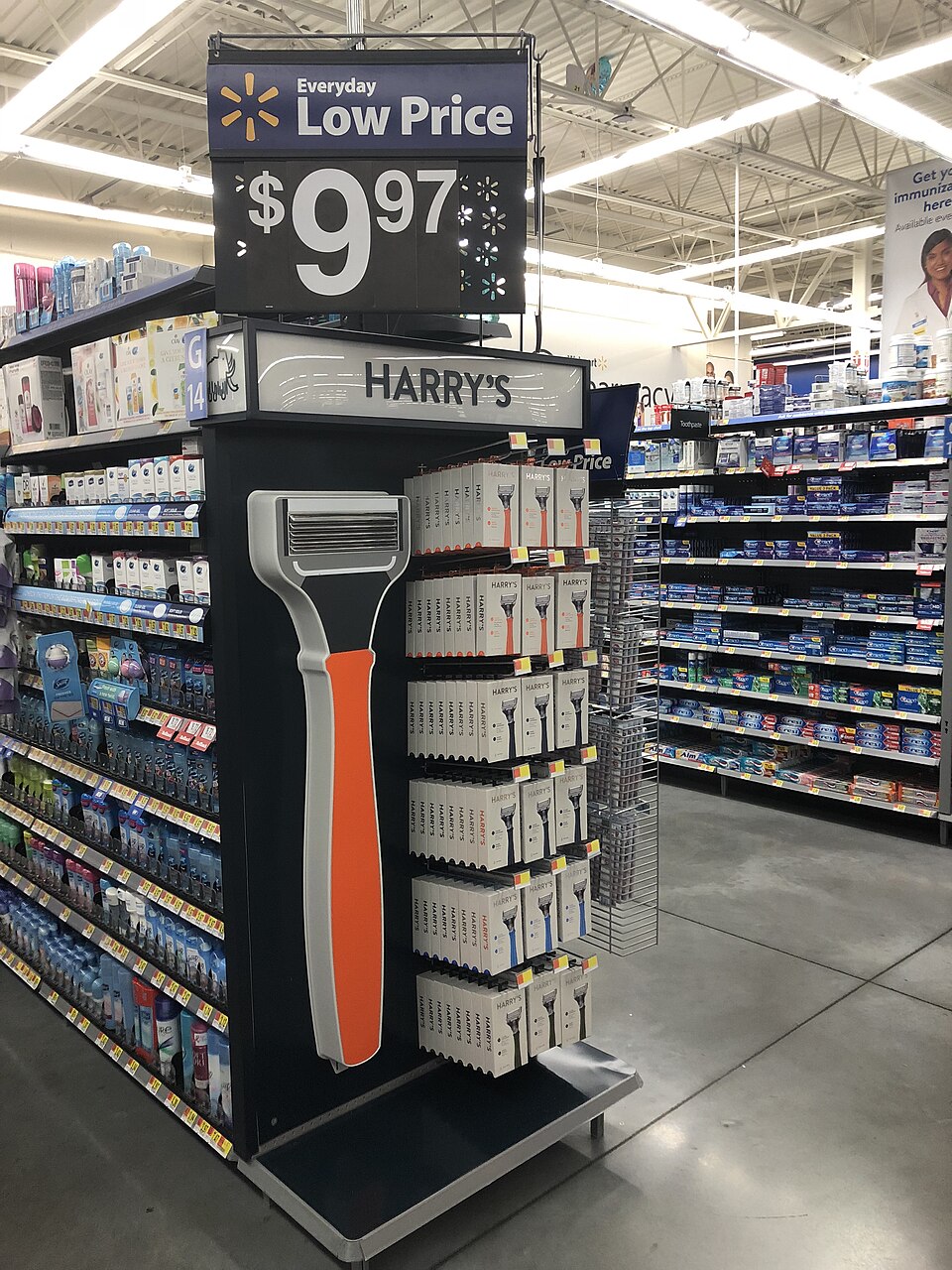
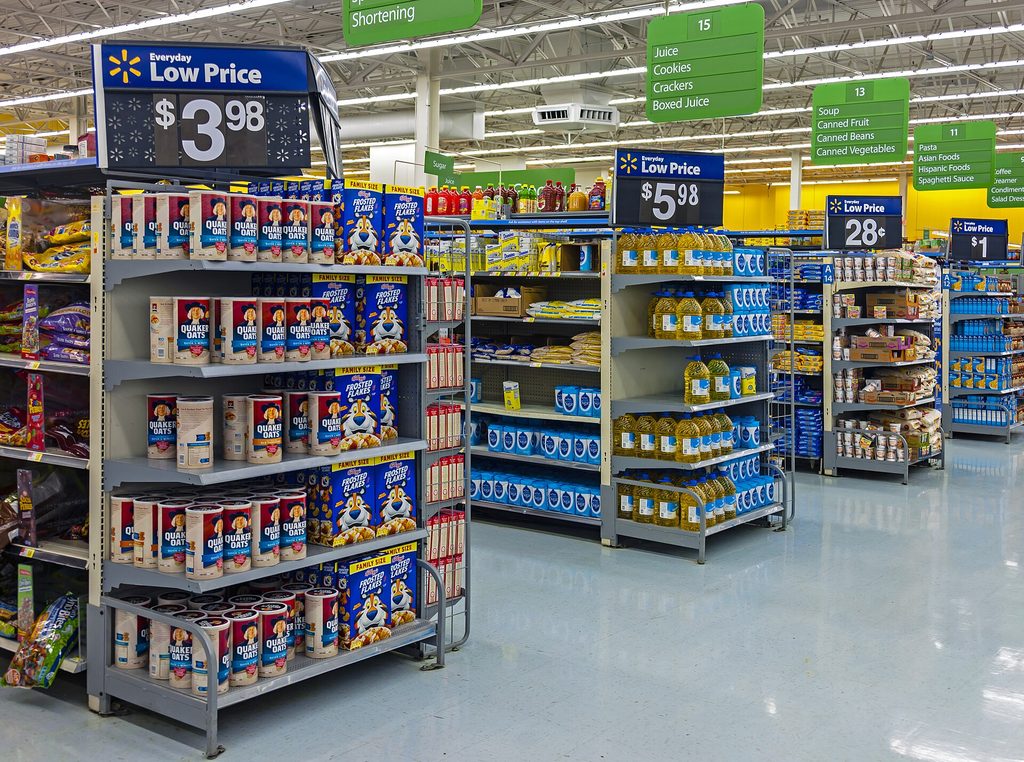
The end-cap—the end of a gondola shelving unit—occupies a special place within a retail store. Positioned at the intersection of a main aisle and a product aisle, it is often noticed by customers well before they see the items displayed on standard shelves. This offers immense potential, provided that the end-cap design goes beyond merely serving as extra space for a logo, graphics, or products. A well-designed end-cap should capture a customer’s attention from a distance, clearly communicate which brand or product category is on display, and, upon closer approach, draw the eye toward specific items to facilitate the purchasing decision. For this reason, when designing an end-cap, it is essential to consider not only its visual appearance but also how customers will perceive and interact with it.
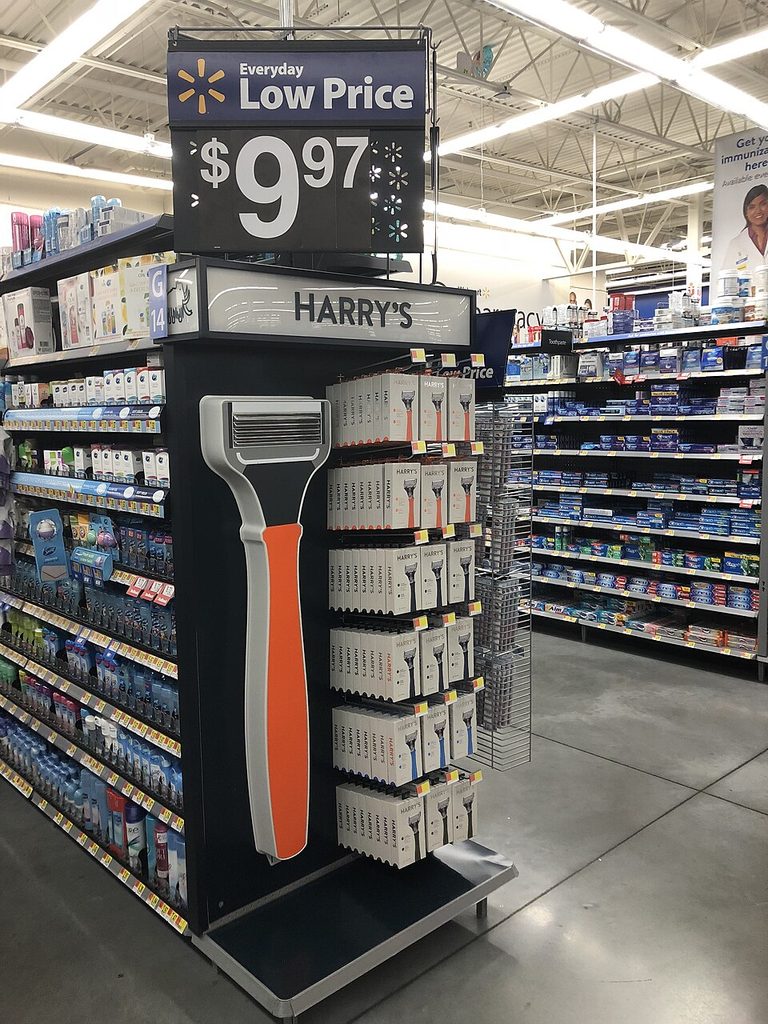
A shopper doesn’t look at the end of a gondola display; they view it from the front.
One of the most common mistakes made during the design phase is analyzing a display solely from a head-on perspective. When viewing a design on a monitor, we typically look at it from directly in front. In a real-world retail environment, however, a customer rarely views a display from such an angle. They might, for instance, see the end of a gondola unit:
- from the main store aisle,
- at an angle while moving between shelves,
- from the opposite direction of travel,
- while walking along a shelf,
- only after entering a specific aisle.
from the main store aisle,
at an angle while moving between shelves,
from the opposite direction of travel,
while walking along a shelf,
only after entering a specific aisle.
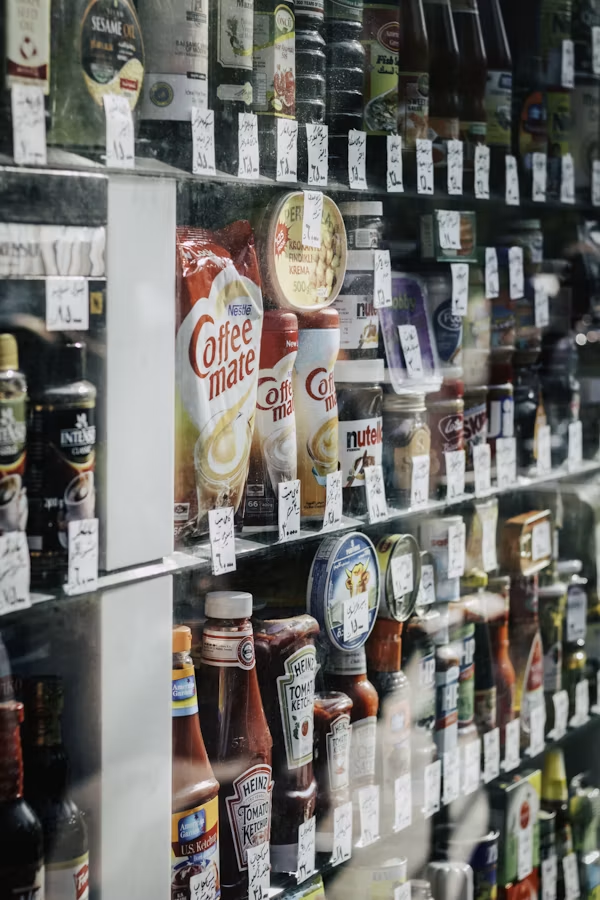
There is no single, universal template for designing an end-cap display. Everything depends on the objective of the display and the nature of the offering being presented. If an end-cap is intended to support the launch of a specific product, that product should be the primary focus of the communication. Conversely, when showcasing an entire portfolio, the brand or product category may take precedence. The approach shifts again during a promotional campaign, where price often plays the key role. Problems arise when all elements of the communication are given equal weight—when the logo, product image, advertising slogan, price, promotional offer, additional information, and spatial elements all compete for the customer’s attention. The result is visual chaos rather than a clear, coherent message. Therefore, a well-planned communication hierarchy should intentionally guide the viewer’s gaze. One possible sequence could look like this:
Brand → product → advertising message → price or additional information
Naturally, this layout may vary depending on the campaign’s objectives. The most important thing is that the customer immediately understands what they should focus on.
The product must remain the star of the display.
Striking fixtures, bold branding, and attractive spatial elements do not always translate into effective product display. Even the most visually polished design may fail to serve its purpose if the product becomes difficult to notice or inconvenient to pick up. In a retail context, it is not just the first impression that counts. A customer should also be able to:
- quickly spot the product they are interested in,
- identify a specific variant,
- reach for the packaging with ease,
- read the price without any difficulty,
- compare the available options.
Therefore, when designing a product display, it is essential to analyze both the space allocated for advertising communication and the actual functionality of the shelves. Key factors include the height and depth of the shelves, the number of facings, the size of the packaging, and how items are positioned in relation to graphic elements. It is also worth considering how an end-cap display will look once some of the products have been sold. A display might look perfect when fully stocked, but it is only through day-to-day use that one can determine whether the design truly meets the needs of the store and its customers.
The end of the gondola competes with the entire store environment.
When preparing 3D visualizations, a design is most often presented in an orderly, neutral environment. This makes it easy to evaluate its aesthetics, proportions, and individual elements. In an actual retail space, however, the situation is entirely different. Within the customer’s field of vision, the following are present simultaneously:
- other brands and product packaging,
- price and promotional messaging,
- product category labels,
- adjacent gondola ends,
- point-of-sale (POS) advertising materials,
- multimedia screens,
- visual communication elements of the retail chain.
As a result, a display that appears highly striking on a computer screen may lose its visibility once implemented in a store. However, this does not mean that the solution lies in adding more graphics, colors, or three-dimensional elements. In fact, simplifying the communication often yields much better results. The more visually intense the retail environment, the more important a clear hierarchy of information becomes. A well-designed end-cap display should highlight the brand while remaining consistent with the overall retail space.
Rotating the messaging without needing to replace the entire structure
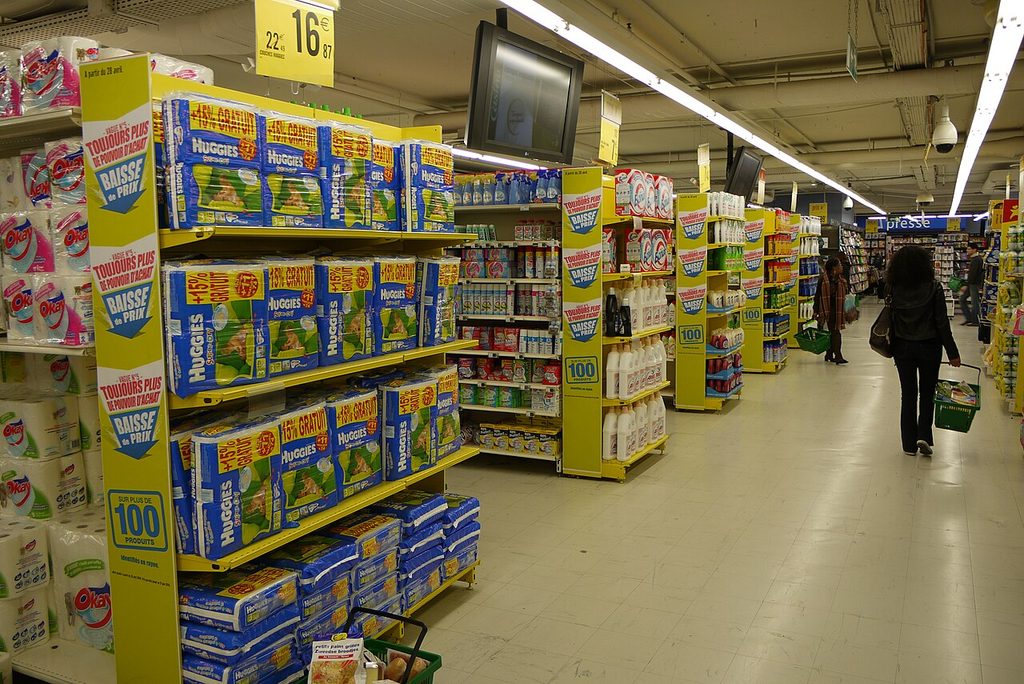
For displays designed for a longer duration, the ability to update advertising messaging becomes particularly important. Brands frequently introduce new products, launch promotional campaigns, and refresh marketing materials. Consequently, a gondola end unit should allow for the messaging to be adapted to current needs. Elements that may be subject to change include, among others:
- advertising graphics,
- marketing slogans and messages,
- pricing information,
- seasonal elements,
- materials related to product launches,
- indicators for current promotions.
This does not always necessitate the production of an entirely new display structure. As early as the design phase, one can incorporate interchangeable communication elements—such as graphic panels, toppers, or specialized advertising inserts. This approach allows for the visual update of a display without altering its core framework. For permanent displays, this can significantly extend the lifespan of the unit while simultaneously reducing the costs of future campaigns. In this way, a lasting brand zone is created—one that can be regularly adapted to align with evolving marketing initiatives.
In-store navigation as an element of end-cap design
End-cap displays can serve far more purposes than simply showcasing products or advertising messages. A well-planned display also helps customers navigate the retail space. By clearly labeling product categories, shoppers can identify the merchandise they are looking for even before entering an aisle. This is especially important in large-format retail stores, where customers move among dozens of shelving units while being exposed to a multitude of visual cues. Consequently, the design of an end-cap display should take the entire customer journey into account, rather than focusing solely on the appearance of the individual unit. When planning such a display, it is worth considering a few fundamental questions:
- At what point will the customer notice the end of the gondola display?
- From what distance will it be visible?
- What elements are located in its immediate vicinity?
- Does the signage allow for quick identification of the product category?
- Does the display make it easy to find specific items within the assortment?
The answers to these questions often have a greater impact on the effectiveness of a display than the addition of another decorative element.
The functionality of a gondola end and the day-to-day operations of a store
When designing a display, it is important to remember that it will be used not only by customers but also by store staff. It is the staff who are responsible for regularly restocking merchandise, maintaining order, cleaning the display structure, and updating promotional messaging. If accessing the products is inconvenient, or if replacing promotional materials requires dismantling numerous components, these issues will persist throughout the entire lifespan of the display. Therefore, the following factors should be taken into account as early as the design stage:
- easy access to all shelves,
- efficient product replenishment process,
- structural stability and durability,
- ability to quickly swap out graphics,
- access to lighting and electronic components,
- ease of cleaning individual parts,
- possibility of carrying out maintenance work.
These are not merely technical issues that can be resolved after the visual design has been approved. They are an integral part of the professional design of POS materials and retail space fixtures.
How to unlock the full potential of the carrycot end? A summary
The potential of an end-cap display stems primarily from its unique location within the retail space. Customers can spot the display from the main aisle, even before they reach the shelf itself. Consequently, a well-designed end-cap can simultaneously boost brand visibility, assist with in-store navigation, highlight specific products, and facilitate purchasing decisions. However, an effective design requires careful consideration of several factors, including customer traffic patterns, display visibility, the hierarchy of messaging, shelf functionality, the ease of updating promotional materials, and the day-to-day maintenance of the structure.
Design and production of gondola end units at UC POS
At UC POS, we specialize in the comprehensive design and production of gondola ends and brand zones—from the initial concept to final implementation within a retail environment. We develop 2D and 3D designs, engineer structural solutions, select appropriate materials and technologies, and create prototypes. We also manage the production, logistics, and installation of the finished units. Our projects are executed either by integrating with existing retail shelving systems or by creating custom-built, permanent or temporary, installations. Depending on specific requirements, these displays can be enhanced with lighting, three-dimensional elements, and multimedia solutions from UC PRO. By combining design and production expertise, we are able to evaluate every concept not only for its aesthetic appeal but also for its feasibility in terms of manufacturing, installation, and long-term use.
Have an idea for a gondola end display? Bring it to life with UC POS.
If you are planning a new display or looking to refine an existing design, we can help you analyze its potential. We will evaluate product visibility, communication hierarchy, ergonomics, structural design, material selection, and production feasibility. We can also develop a complete project from scratch and guide you through every stage of the implementation process.
Concept → 2D and 3D design → structural engineering → material selection → prototype → production → logistics → assembly
Get in touch with UC POS to create an end-cap display that not only grabs attention but, above all, effectively showcases your products.