


The primary purpose of a “shelf interrupter” (also known as a shelf-edge sign or stopper) is to make a specific product or brand stand out from the many other items on a retail shelf. Problems arise when the promotional material becomes more prominent than the product itself—for instance, by obscuring the packaging or hindering access to the merchandise. While a large, colorful promotional element might look striking in a digital visualization, real-world retail environments impose a number of specific requirements, such as maintaining proper spacing between shelving units, accounting for shelf heights, ensuring easy access to products, and addressing logistical concerns related to restocking. Therefore, the design process for any shelf display element should begin with an analysis of the product itself and its intended placement on the shelf, rather than focusing solely on the available advertising space.
Shelf stopper visibility vs. product visibility
A shelf talker should direct the customer’s attention toward the product, rather than competing with it for space. If a piece of point-of-sale (POS) material is too large, it may obscure packaging, price labels, or products located on adjacent shelves. As a result, while the customer might notice the advertisement, they may struggle to find the actual product it promotes. It is therefore essential to evaluate a design within a broader context: Does the product remain clearly visible? Can the shopper easily recognize the brand? Is the message on the shelf talker unambiguously linked to the relevant product? Does the material hinder access to neighboring items? Well-designed shelf communication should help customers navigate the retail space, rather than contributing to further visual clutter.
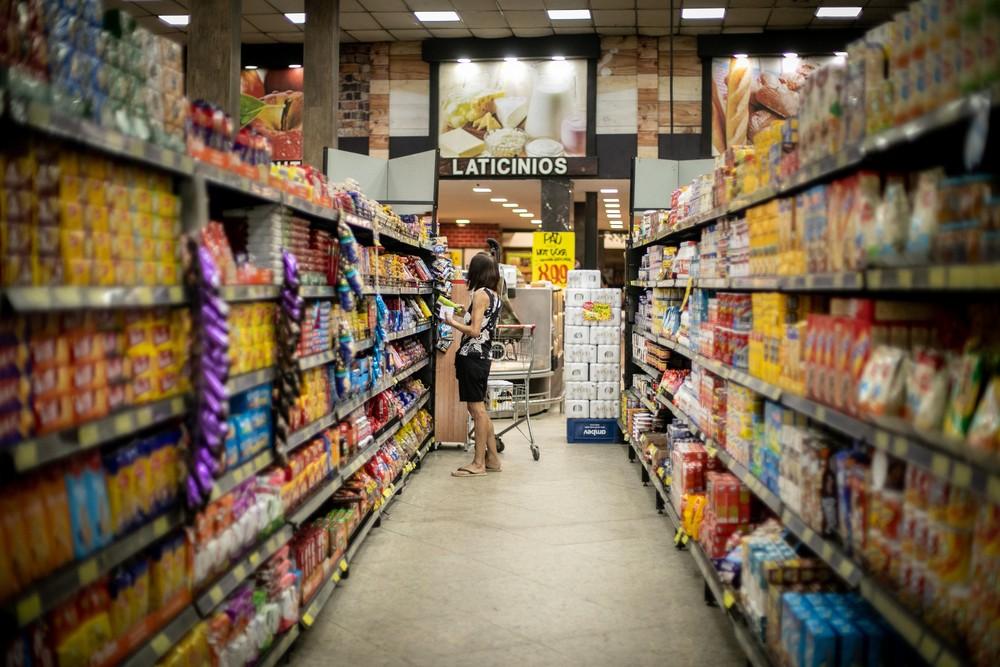
The format of a shelf stopper should be determined by the shelving unit.
There is no single, universal size for a shelf-edge sign (stopper) that works for every product category and every store. A narrow cosmetics shelf, a rack for dietary supplements, and a food product display each require a different solution. Factors such as shelf width and depth, mounting height, product size, and the distance between shelving units all play a role. When designing, it is also important to consider the maximum allowable dimensions for promotional materials as specified by the retail chain. A sign that is too large may protrude too far into the aisle, increasing the risk of being accidentally knocked by a customer or a shopping cart. Conversely, a sign that is too small may fail to serve its purpose, as the message could become difficult to read. The “best” size is not always the largest possible size.
The shape of a stopper. When does a custom design make sense?
A shelf stopper can have a classic rectangular shape, but it can also be designed to reflect a specific product, logo, or campaign element. Using a custom die-cut offers greater creative potential, which is particularly useful for new product launches and promotional campaigns. It is worth noting, however, that a complex shape does not always guarantee more effective communication. Narrow, protruding elements may be more prone to deformation or damage. Furthermore, an elaborate design increases the surface area, making it more likely that a customer might accidentally snag or bump into it. For this reason, the graphic design and the structural design should be developed in tandem. While the form is intended to attract attention, it must also maintain the necessary durability and functionality.
A message that can be read while on the move
A customer moving along an aisle does not spend a dozen or so seconds analyzing every piece of advertising material.
Therefore, a shelf stopper should communicate one key piece of information. This could be a new product announcement, a promotion, the name of a product line, or a specific product feature. Too much text, small typography, and multiple competing messages hinder readability. When designing shelf-based communication, the contrast between the text and the background is also crucial. It is worth verifying that the message remains legible under actual in-store lighting conditions and against the backdrop of the products displayed on the shelf.
The safety of a shelf stopper begins with its attachment
Even a well-designed piece of advertising material can cause problems if the mounting method is not chosen correctly. A shelf-edge sign (or “shelf talker”) protrudes beyond the edge of the shelf, so it must remain stable during everyday use. During the design process, one must consider the rigidity of the material, the method of attachment to the holder, resistance to accidental impact, and the feasibility of safe removal. The edges of the component are also important; sharp corners or rigid, protruding parts can increase the risk of injury in the event of accidental contact. Since not every holder fits every price rail, the attachment mechanism should always be tested on the specific shelving system in use.

A shelf stopper must not hinder the restocking of merchandise.
This is one of those aspects that can easily be overlooked during the design phase. While an advertising element might be highly visible, it can hinder daily store operations if staff have to remove it every time they restock products. During the design process, it is important to ensure that a shelf stopper does not block access to products, complicate the changing of price tags, or interfere with the opening or adjustment of shelving components. This is especially critical for high-turnover products, where shelves are restocked multiple times throughout the day. A well-designed shelf stopper should function on the shelf without requiring staff to constantly readjust its position.
How can a shelf stopper design be evaluated before production?
For larger production runs, it is advisable to prepare a prototype and test it in an actual retail environment. It is not enough to simply verify that the colors and graphics match the design; one must also evaluate product visibility, the clarity of the messaging, the stability of the mounting, and the ease of accessing items on the shelf. A useful, simple test involves viewing the display unit from several perspectives: directly from the front, from the side, and while walking along the aisle. It is also worth checking whether the structure remains stable if accidentally bumped and whether store staff can easily restock the products. An error identified in a prototype can be corrected relatively easily; however, if the same issue exists during the production of several thousand units, it will be replicated across the entire batch.

Designing shelf communication at UC POS
At UC POS, we view POS materials not merely through the lens of graphic design, but also in terms of their construction, production, and the conditions under which they will be used. When designing shelf stoppers, we analyze factors such as format, material selection, attachment methods, and production capabilities. We develop 2D designs, structural solutions, and prototypes, followed by full-scale production, packaging, and logistics. By integrating design with our own manufacturing facilities, we are able to evaluate technical solutions before committing to the production of large batches. This is particularly important for campaigns spanning multiple retail locations, where the design must be consistent, easy to install, and fully compliant with the specific requirements of the retail chain.
A good shelf stopper supports the product rather than obscuring it.
The most elaborate design is not always the best. Sometimes, a small, well-placed shelf stopper with a clear message can be more effective than a large promotional element that occupies a significant portion of the display space. When designing shelf-based communication, key factors include proportions, product visibility, secure attachment, and safety. A shelf stopper should catch a customer’s eye long enough to direct their attention toward the intended product.
Do you need an evaluation of a shelf communication design?
W UC POS możemy przeanalizować projekt shelf stoppera pod kątem formatu, widoczności produktu, konstrukcji, materiału i sposobu mocowania. Jeżeli planujesz większą serię, możemy również przygotować prototyp, zweryfikować rozwiązanie przed produkcją oraz zrealizować zamówienie.
Contact UC POS to consult on your shelf communication project before implementation.