


Most visualizations look great—perfectly smooth surfaces, sharp edges, flawless color, and elegant lighting. The problem only arises when the design goes into production.
It is at this stage that it becomes clear whether the display will be easy to manufacture and resistant to the rigors of transport and daily use in the store. MDF offers immense design possibilities but requires the right technical approach. A few decisions made too late can significantly increase production costs or shorten the lifespan of the entire display.
MDF is a great material if its potential is utilized.
For years, MDF has remained one of the primary materials used in the production of permanent displays, retail furniture, and store fixtures. It enables the creation of:
- perfectly smooth surfaces,
- precision milling,
- high-quality lacquering,
- hidden mounting systems,
- elegant premium finish.
That is why it appears so frequently in designs for the beauty, electronics, and premium alcohol sectors, as well as in showroom fit-outs. At the same time, it is worth remembering that MDF is unforgiving of design errors.
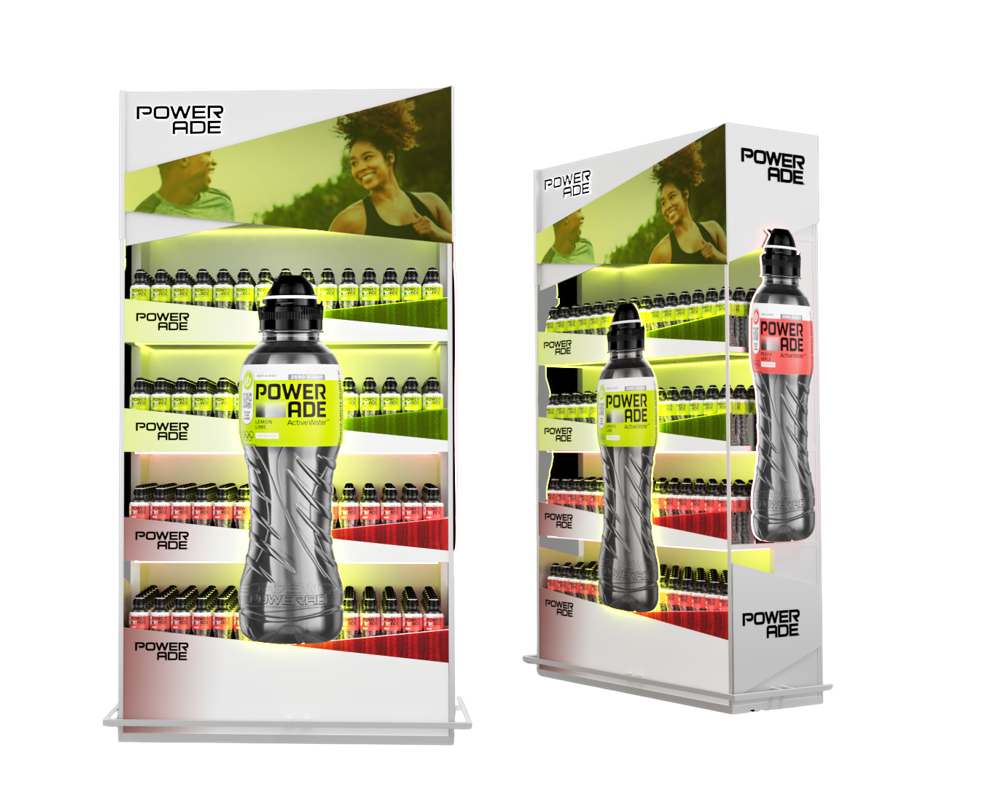
Moisture is the greatest enemy of standard MDF.
In the visualization, the material looks identical regardless of usage conditions. In reality, the location where the display is placed makes a huge difference. If the display is to be used:
- at the entrance to the store,
- near refrigeration zones,
- in DIY stores,
- at airports,
- during events,
It is worth considering the use of moisture-resistant boards or appropriate protective coatings as early as the design stage. It is far easier to do this before production than to repair damage after several months of use.
Most problems arise at the edges.
Large, flat MDF surfaces usually do not cause problems. Milled and cut edges are the most vulnerable; this is precisely where the following most often occurs:
- splinters / fragments / chips,
- damage during transport,
- uneven absorption of the varnish,
- micro-cracks from impacts.
That is why we analyze the finish of every visible edge as early as the design stage. Sometimes, a slight change in the milling radius can significantly increase the durability of the entire display unit.

The painting process begins much earlier than in the paint shop.
Customers often focus on choosing the color. For the manufacturer, however, the preparation of the surface is far more important. The final result is influenced by factors such as:
- milling quality,
- grinding,
- priming,
- number of varnish layers,
- drying method.
A well-prepared component looks just as good after several years of use as it does on the day of handover.
Transport should be taken into account as early as the design stage.
A display unit leaving the production line does not go straight to the store. First, it passes through warehouses, transport companies, and installation teams. That is why we analyze, among other things:
- possibility of flat-pack transport,
- method of protecting painted components,
- assembly sequence,
- number of parcels,
- the mass of the individual modules.
A design that looks good on screen does not always withstand a journey of several hundred kilometers.
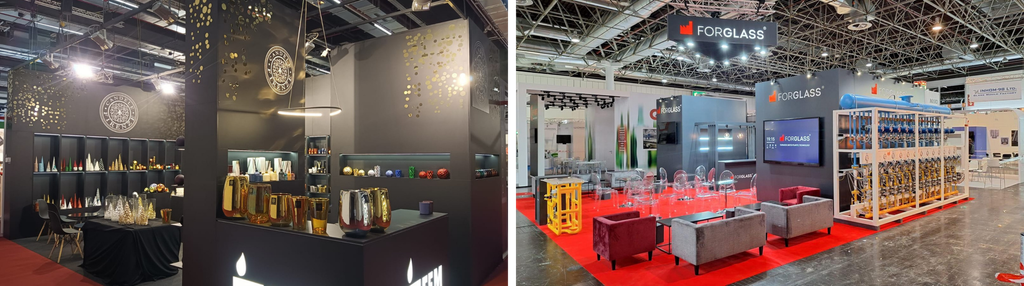
Not everything has to be made of MDF.
One of the most common mistakes is designing the entire display unit using a single material. Combining technologies deliberately yields significantly better results.
For example:
- the supporting structure can be made of steel,
- visible MDF surfaces,
- acrylic product display elements,
- glass shelves,
- wooden finishing details.
This solution allows for greater durability, lower weight, and a more attractive appearance.
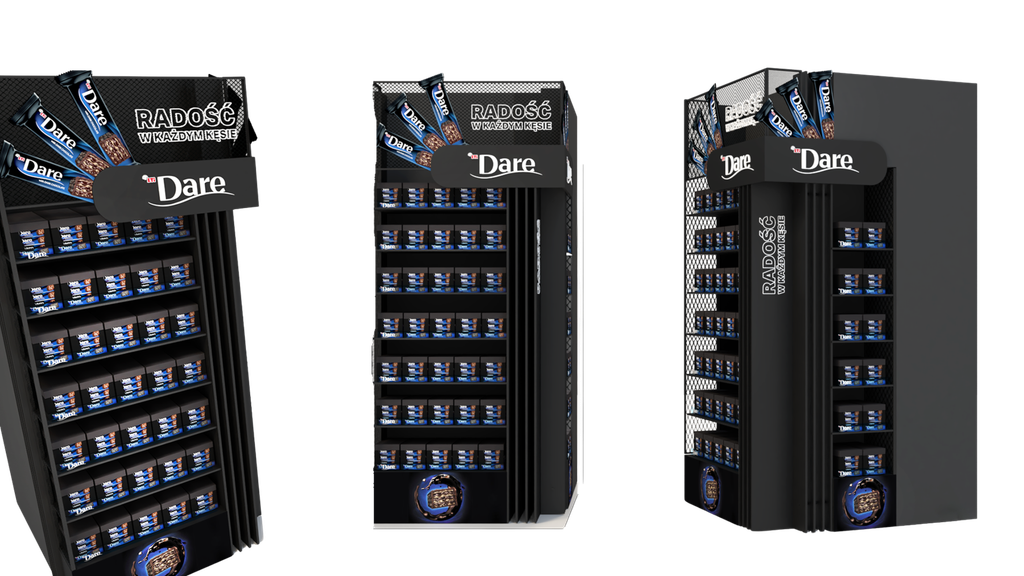
A good design anticipates the future of the display.
A permanent display unit often remains in use for several years. Therefore, it is worth considering the following possibilities as early as the design stage:
- graphic exchanges,
- refreshing the communication,
- backlight servicing,
- replacement of damaged components,
- modernizing the exhibition without manufacturing the entire structure from scratch.
This solution makes it it possible to reduce the costs of future campaigns and extend the lifespan of the display unit.
Summary
MDF offers immense design possibilities, yet its full potential is realized only when the design takes the entire implementation process into account. It is not just the visual appearance that matters, but also the milling method, edge protection, lacquer quality, transport, installation, and subsequent servicing. A good display unit begins long before production starts; it originates at the stage of deliberate design.
At UC POS, we design and manufacture POS displays that combine aesthetics with functionality. Each design is created with consideration for actual in-store conditions, product display methods, and the convenience of both customers and staff. Thanks to this, the display not only looks good but, above all, effectively boosts sales.
Do you have a visualization of an MDF display stand and want to check if the design is ready for production?
Send us a render, technical design, or concept. We will analyze the technical solutions, identify potential risks, and propose solutions that enhance durability, facilitate production, and reduce implementation costs.
At UC POS, we design, prototype, and manufacture POS displays made from metal, wood, MDF, acrylic, plastics, and cardboard. Right from the conceptual stage, we analyze ergonomics, structural stability, and in-store placement to ensure the display is safe, durable, and effective at driving sales.