



The most expensive checkout display is not the one made of metal or acrylic. The most expensive one is the one the customer doesn’t notice at all.
A countertop display has just a few seconds to catch the eye of someone standing at the checkout. During that brief window, it must be highly visible, easy to restock, and convenient for both the customer and store staff. That is why designing a checkout display differs significantly from designing large freestanding units; every centimeter counts.
Why does the checkout area follow its own rules?
At the checkout, the customer is often no longer planning further purchases. Yet, this is precisely the area where impulse decisions are frequently made. A good countertop display should:
- not to restrict the cashier’s work,
- take up as little space as possible,
- display the product effectively,
- enable rapid replenishment,
- encourage the consumer to reach for the product without the need for additional messages.
The simpler the customer’s interaction with the product, the greater the chance of a sale.

A good display does not compete with the product.
A common mistake is trying to cram too much information into a small space. A large logo, multiple messages, photos, icons, a price, and a QR code can make the display look chaotic. The result is the opposite of what was intended: the customer doesn’t know where to focus their attention.
In a well-designed display, the product always takes center stage. The entire structure exists solely to showcase and sell it.
Projekt zaczyna się od zachowania klienta
When designing a checkout display, we analyze, among other things:
- from which side the customer approaches the checkout,
- at what height is the blat,
- at what height is the bla
- how much space a cashier needs,
- how often the display unit will be restocked.
how often the display unit will be restocked.
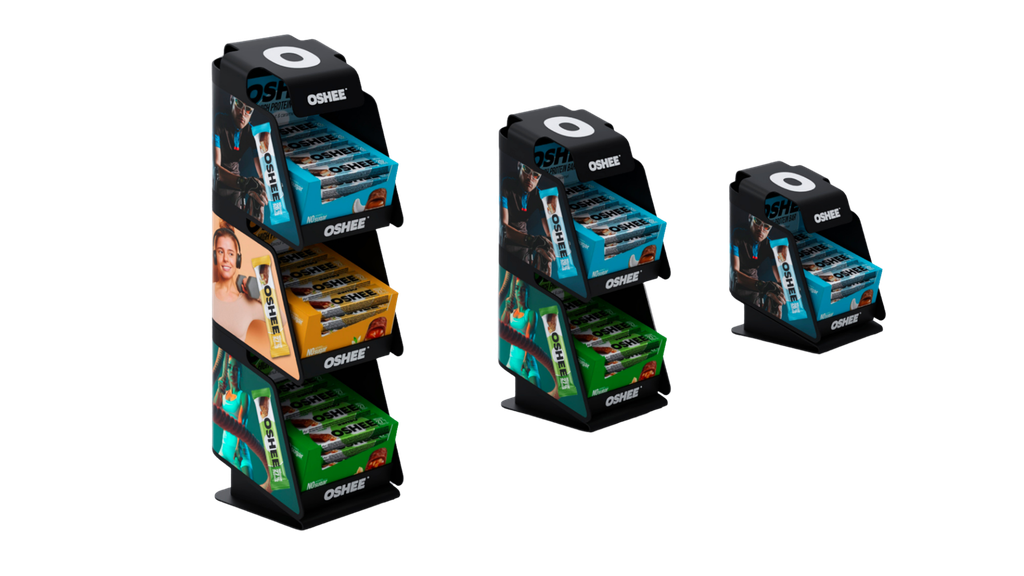
The less space the display occupies, the greater the design requirements.
Paradoxically, the smallest displays are among the most challenging. They must accommodate the right number of products, remain stable, and look good even when some of the stock has already been sold. That is why, as early as the design stage, we analyze:
- center of gravity,
- method of downloading the product,
- possibility of the display unit tipping over,
- option to replace the graphic,
- speed of installation.
It is precisely such details that determine the effectiveness of the display in everyday use.
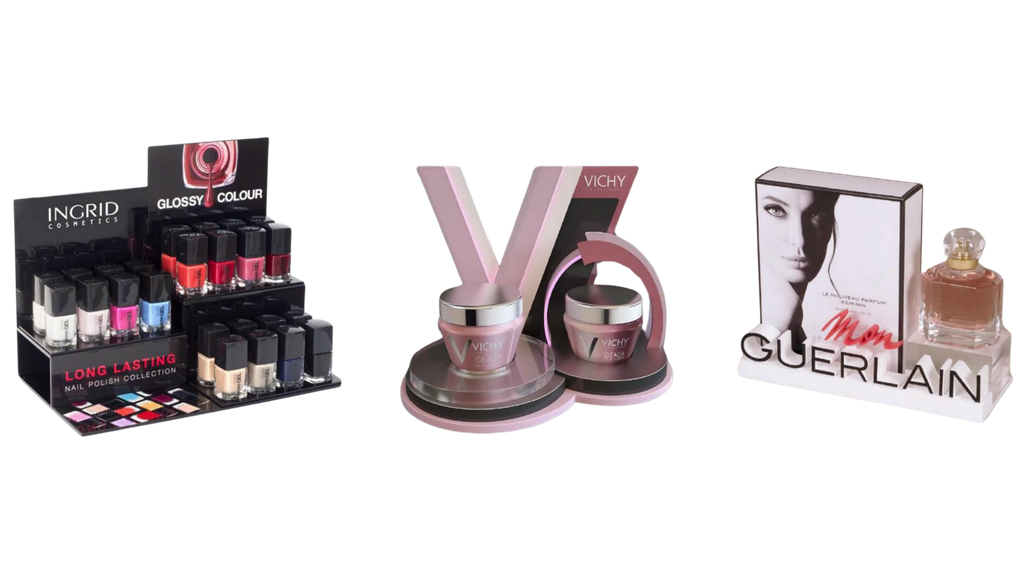
The material should be matched to the product.
Not every checkout display should be made from the same material. Depending on the nature of the product, the display location, and the desired visual effect, we use, among others:
- akryl,
- PMMA,
- PETG,
- MDF,
- metal,
- plywood,
- composites,
- LED-illuminated elements.
Combining several materials in a single structure often yields the best results. This allows the display to be durable, aesthetically pleasing, and cost-effective to produce—all at the same time.
The display unit should be easy to restock.
Even the best-designed display ceases to serve its purpose if store staff lack the time or the means to restock it conveniently. That is why we focus on:
- easy access to products,
- intuitive packaging loading,
- possibility of quickly changing the graphic,
- easy installation,
- resistance to everyday use.
Good solutions make a store’s operations easier, not more complicated.
Summary
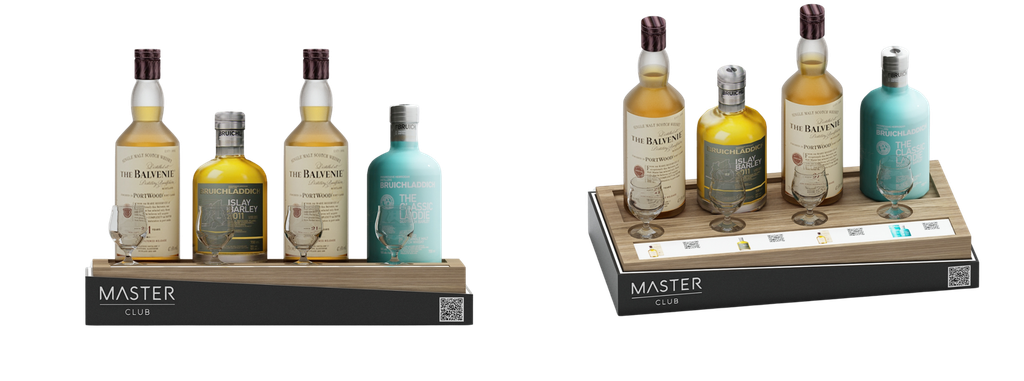
A good countertop display doesn’t have to be large. It needs to be effective. It should attract attention, showcase the product well, and make it easy to pick up, all without interfering with the store’s daily operations.
It is the combination of ergonomics, suitable materials, and thoughtful design that enables even a small display to effectively drive impulse sales. At UC POS, we design and manufacture POS displays that combine aesthetics with functionality. Each project is developed with careful consideration of actual in-store conditions, product presentation methods, and the convenience of both customers and staff. As a result, the display not only looks good but, above all, effectively fulfills its sales function.