


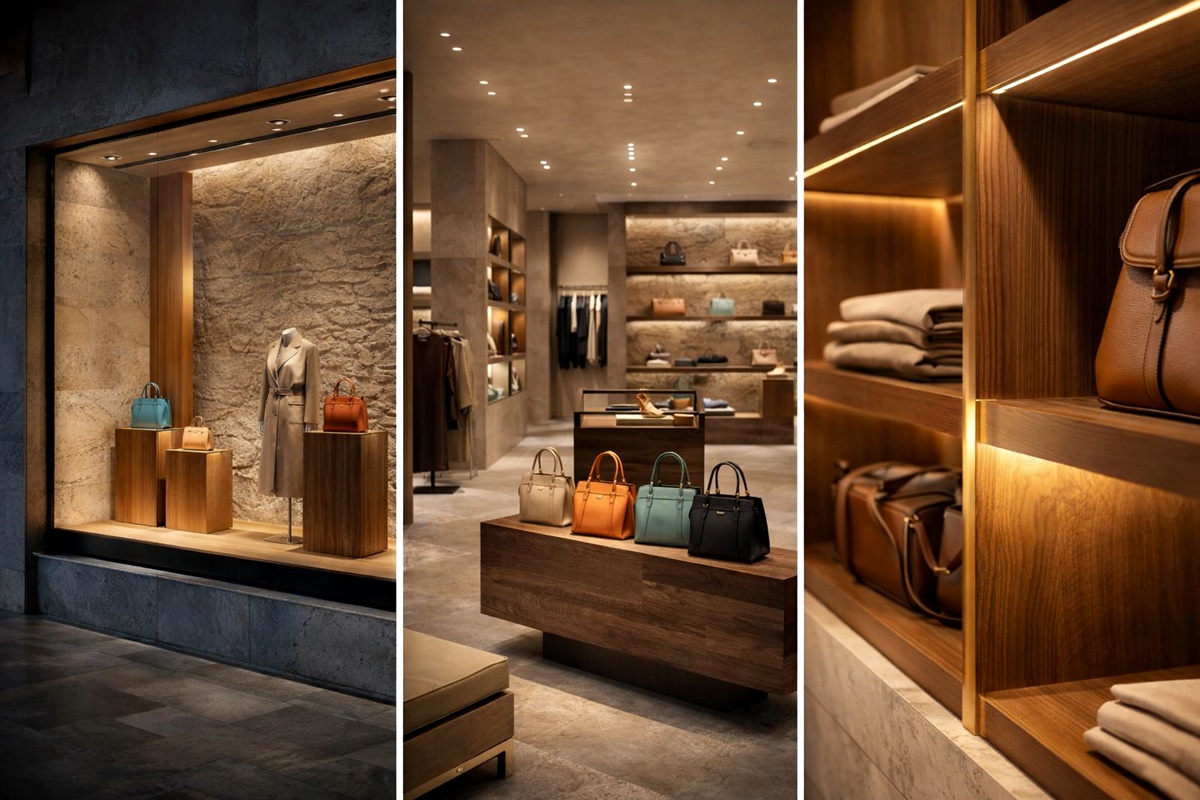
Luxury retail has long been a trendsetter for the entire retail industry. Premium brands are often the first to respond to changes in consumer behavior, redefining the role of brick-and-mortar stores. Today, success is no longer driven by the product alone – customer experience, in-store branding, freestanding displays, and advertising displays play a decisive role in driving sales.
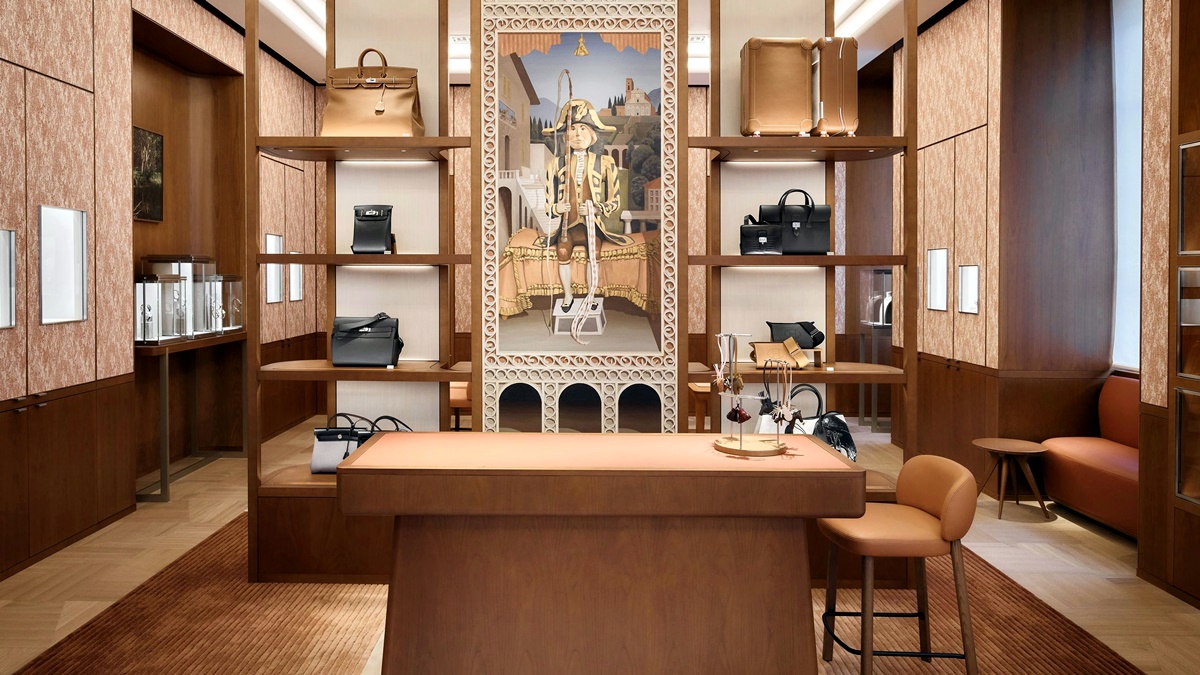
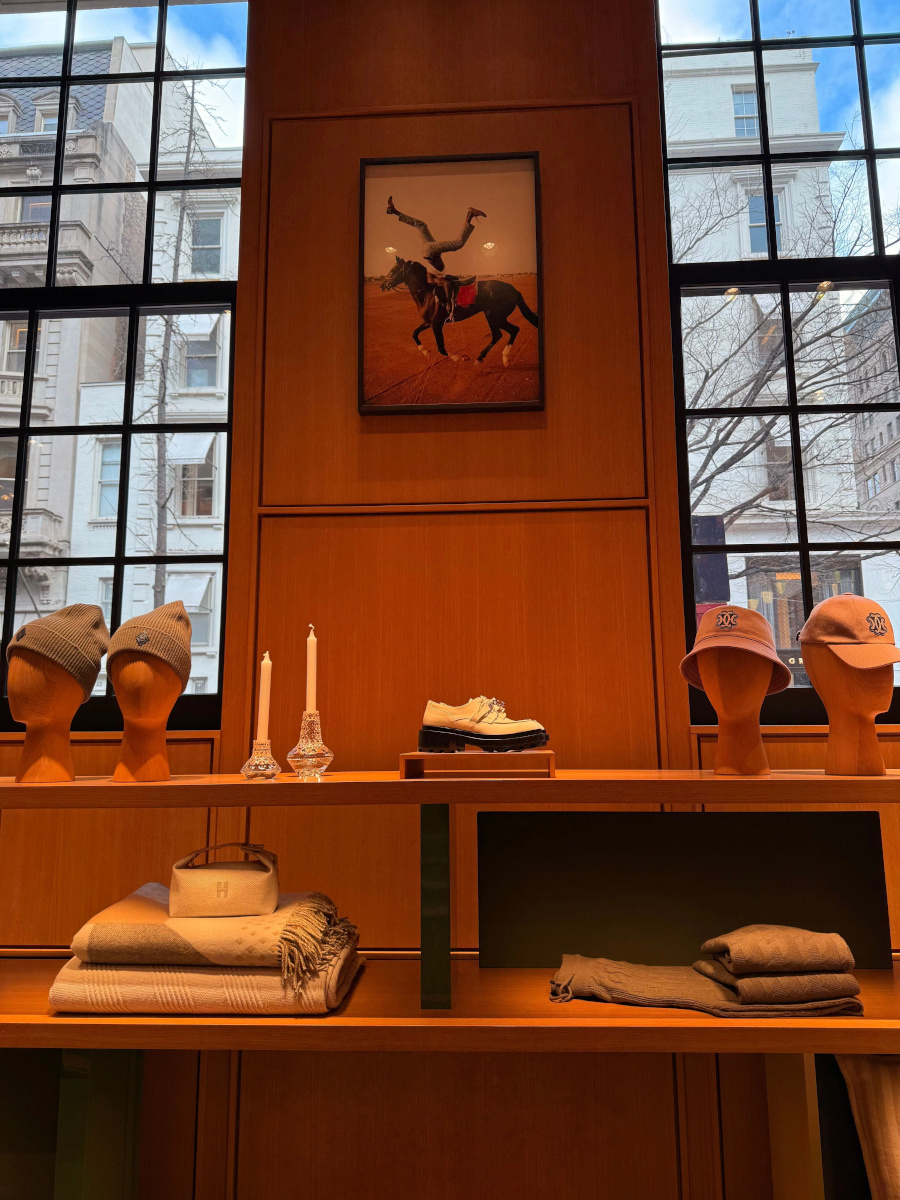
The latest Hermès boutique concept is a strong example of this approach. The brand focuses on craftsmanship, architecture, natural materials, and calm spatial storytelling. These principles are increasingly adopted not only by luxury brands but also by premium and aspirational retailers aiming to increase in-store conversion.
The Core Retail Problem: Stores That Don’t Convert
Many retail brands face similar challenges:
- visually attractive stores that fail to drive sales,
- advertising displays that go unnoticed,
- POS stands that do not guide shoppers,
- inconsistent branding across retail spaces.
This is not a budget issue. It is a POS design and shopper marketing problem.
Design as Brand Storytelling in POS
Modern luxury stores resemble art galleries or curated living spaces. Design becomes a storytelling tool, not decoration.
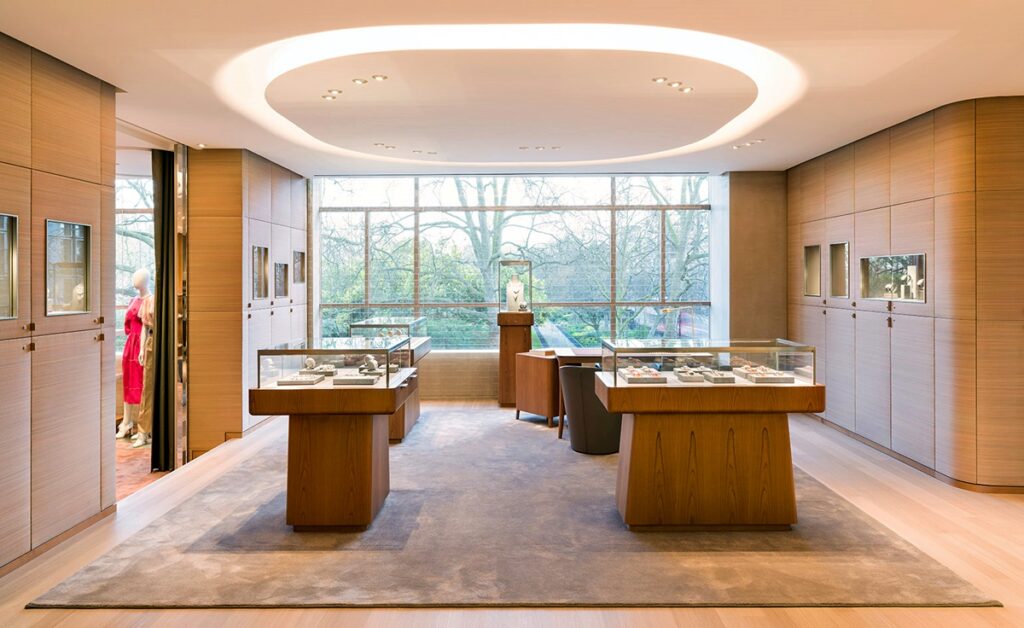
- Key trends include:
- custom-designed retail furniture,
- freestanding POS displays aligned with shopper journeys,
- advertising displays integrated into store architecture,
- lighting as a narrative element,
- natural materials such as wood, stone, and metal.
This approach builds emotional connections and strengthens brand perception.
POS and Store Windows as Shopper Marketing Tools
Store windows, POS stands, and advertising displays are now the first point of contact between brand and shopper.
Well-designed POS solutions:
- czy klient wejdzie do środka,
- which product they will stop at,
- how long they will stay in the store.
Well-designed advertising stands and displays:
- guide the customer’s eye,
- simplify purchasing decisions,
- strengthen store branding,
- increase impulse sales.
This is the essence of effective shopper marketing.
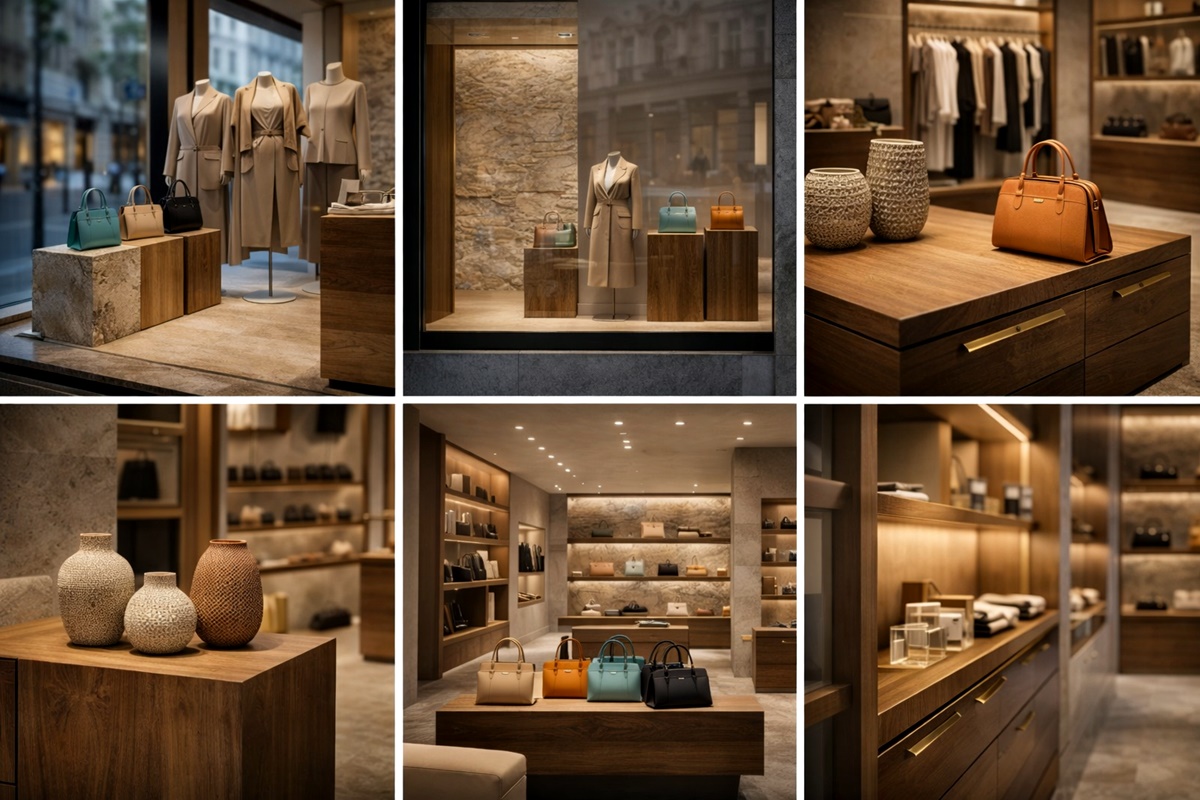
How global trends translate into UC POS designs
As UC POS – a POS Manufacturer, we work with brands that share the exact same goal: to sell more in brick-and-mortar stores.
Our approach to POS design does not start with form, but with the problem:
- why the customer does not notice the product,
- why the display does not convert,
- why the brand gets lost among the competition.
Only then are created:
- free-standing displays,
- advertising displays,
- advertising stands,
- store branding elements,
- a consistent POS architecture.
POS design as an investment, not a cost
One of the biggest mistakes in retail is treating POS as a cost. Meanwhile, a well-designed POS:
- increases the average basket value,
- shortens the purchasing decision time,
- improves product visibility,
- strengthens brand recognition.
Therefore, POS design must be an element of the sales strategy, not an addition to a campaign.
Production and implementation – from concept to store
Effective POS requires not only creative but also technological experience. As a POS Manufacturer, UC POS implements:
- advertising displays,
- advertising stands,
- free-standing displays,
- store fixtures,
- store branding.
Summary – what retail can learn from luxury
Luxury brands clearly show that the future of retail is:
- consistent store branding,
- conscious POS design,
- free-standing displays tailored to the customer,
- experience-based shopper marketing.
A well-designed store and POS are today one of the most effective offline sales tools.
Do you want to design a similar POS? Contact us.