


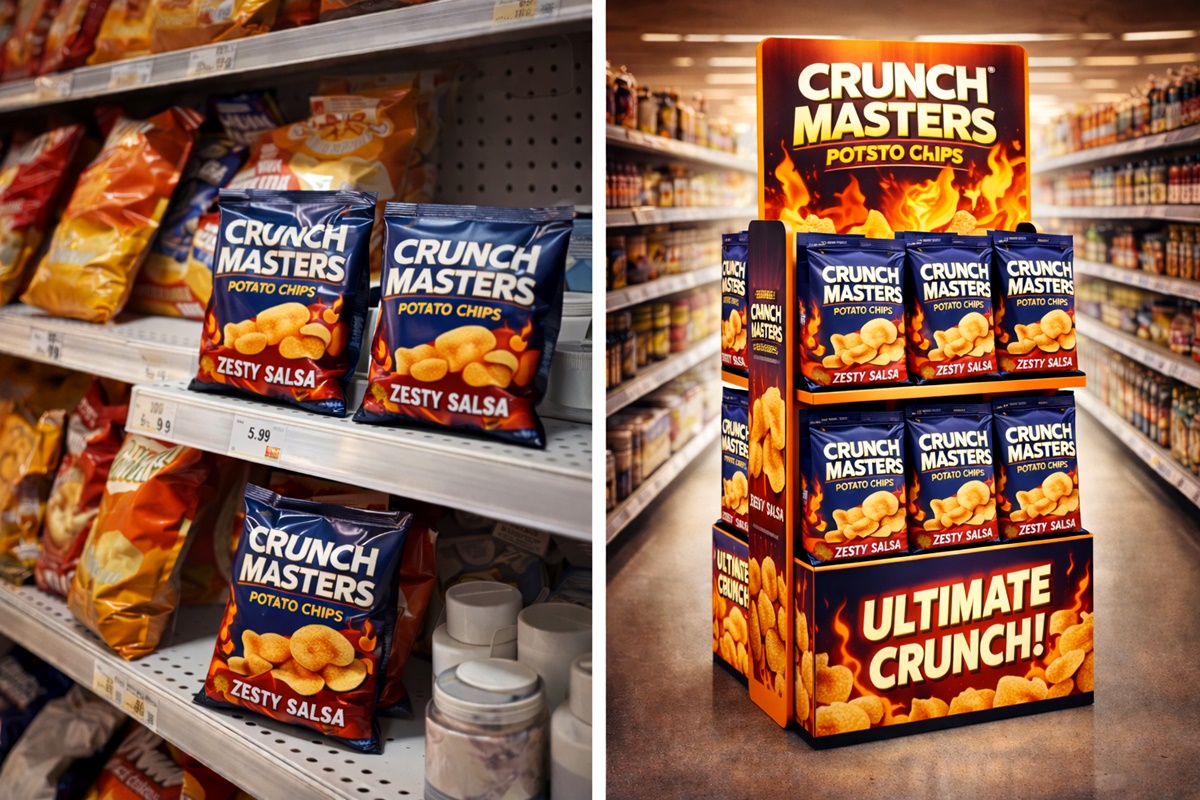
In retail, price rarely sells first.
Customers buy what they notice and understand within seconds.
Many products have good quality and competitive pricing yet show low in-store rotation.
This is usually not a product problem but a shelf decision problem.
As a POS manufacturer, we analyse such situations regularly and the reason is usually the way the product is presented in real store conditions.
The product is invisible
Customers do not buy what they do not notice.
On a shelf with dozens of SKUs a product quickly becomes background.
Effective tools:
- dedicated displays,
- height differentiation,
- product blocking,
- shelf branding.
First stop the eye, then sell.
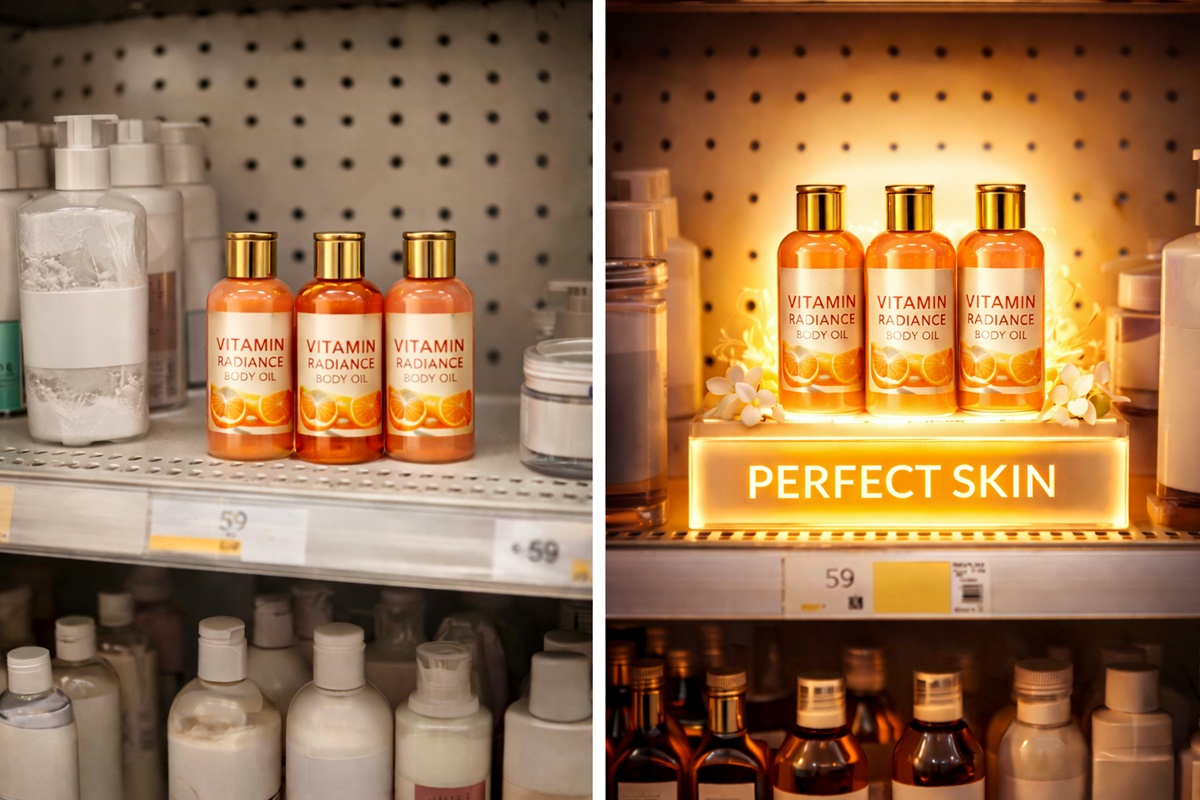
The customer does not understand the product in 2 seconds
Nobody reads packaging in store.
If the customer has to think, they choose another product.
Only three messages work:
• for whom,
• for what,
• effect.
Well designed POS can increase sales without changing price.
Wrong placement
A product may be correct but placed outside the natural customer path.
Common mistakes:
- too low
- too high
- outside line of sight
- next to too many SKUs
In shopper marketing, location often sells more than discount.
No stopping moment
Customers make decisions automatically.
Displays must create a decision moment.
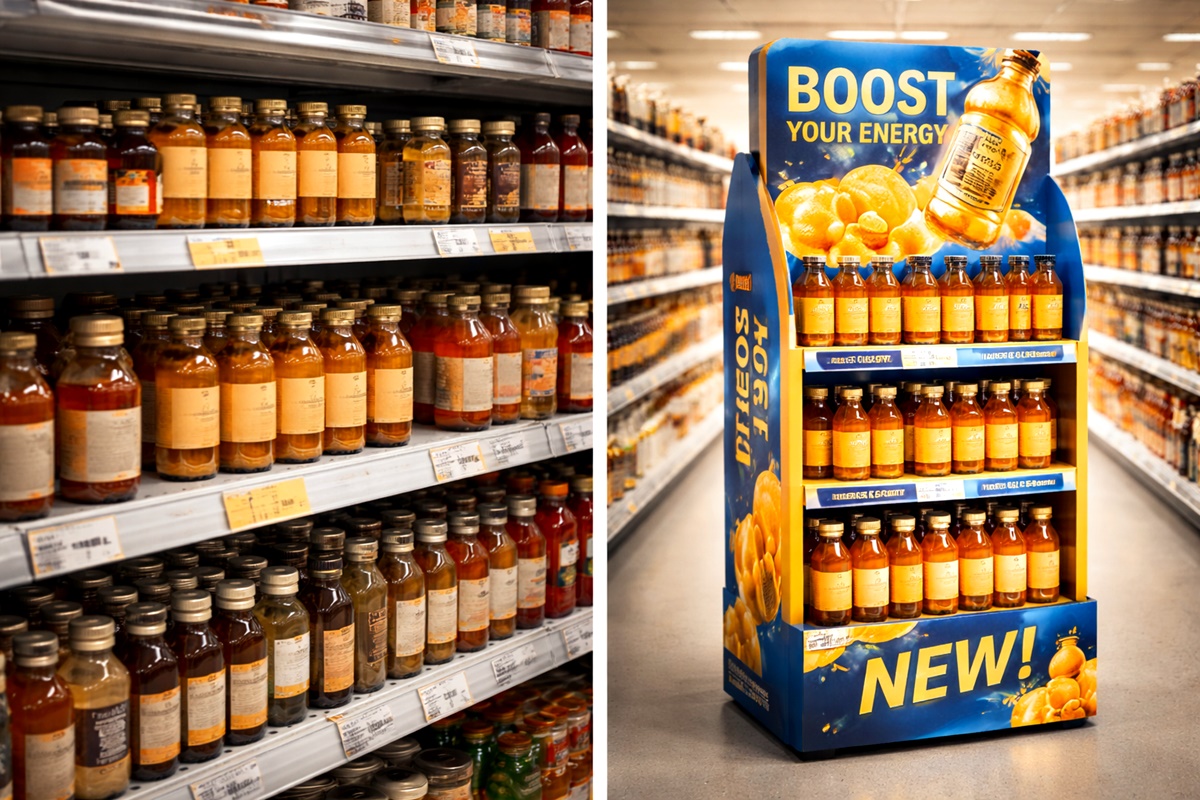
The product looks cheaper than it is
Customers judge visually.
POS materials directly influence perceived value.
Too many alternatives nearby
The bigger the choice, the simpler the decision.
Customers choose the most understandable and visible option.
Dedicated displays increase rotation because they simplify the choice.
Experience insight
In one rollout a global campaign was transferred into stores without adapting communication.
It worked on visuals but disappeared among competitors in real retail conditions.
After simplifying the structure and messaging, rotation increased without changing price or packaging.
hat is why we start retail projects from usage behaviour, not form.
Summary
Customer decision path:
Notice → Understand → Compare → Buy
Most products fail at step one, which is why display quality often impacts sales more than discounts.
Do you have a product with low in-store rotation?
At UC POS we advise, design and manufacture solutions adapted to real retail conditions.