


A floor display is one of the most effective sales tools in retail. It can build brand awareness, promote new products, boost impulse purchases, or create an entire product zone. There is one condition, however: it must be designed with the specific product, display location, and intended use in mind. A poorly chosen display quickly becomes an obstacle in the store, whereas a well-designed one drives sales for months..
What is a floor display?
A floor display—also known as a freestanding display or stand—is a standalone unit placed directly on the store floor. It is most commonly used for:
- promotion of new products,
- seasonal displays,
- special operations,
- presentation of the entire product line,
- building brand visibility.
Unlike a standard store shelf, it can be placed practically anywhere in the store.
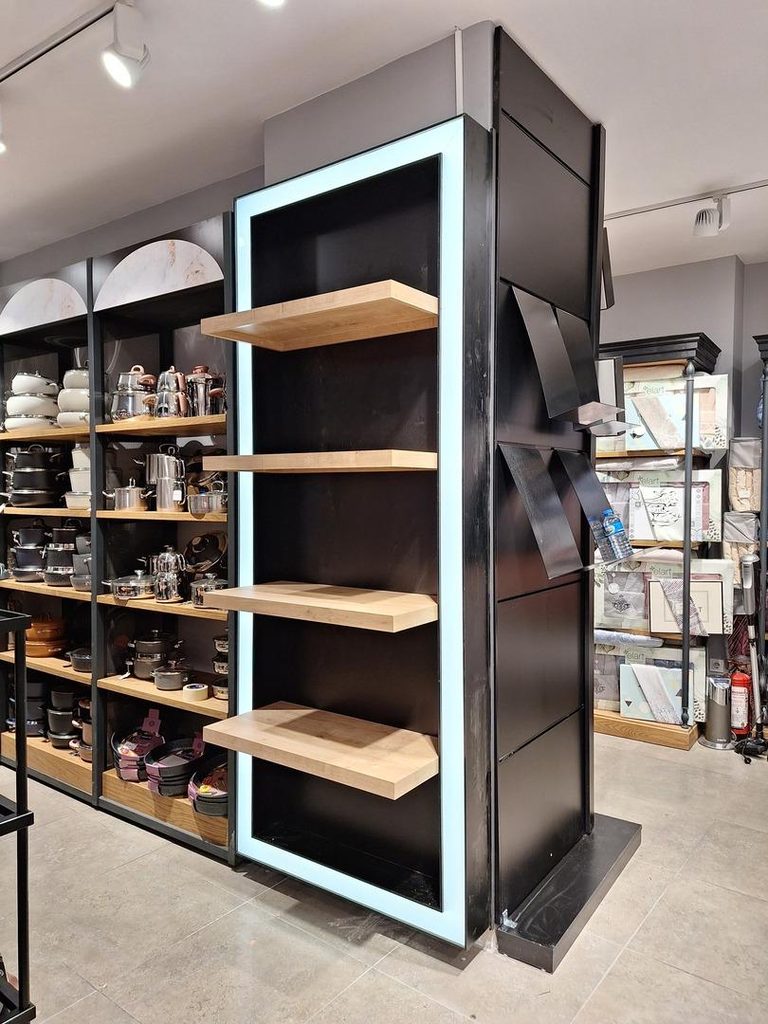
Most popular floor display dimensions
There is no single universal size. Dimensions are selected based on:
- product dimensions,
- SKU numbers,
- installation locations,
- aisle widths,
- możliwości transportowych.
The most common widths are:
- 400–600 mm for small displays,
- 600–800 mm for most retail deployments,
- 800–1200 mm for premium display.
The height typically ranges from 1,200 to 1,800 mm, ensuring that lines of sight remain clear.
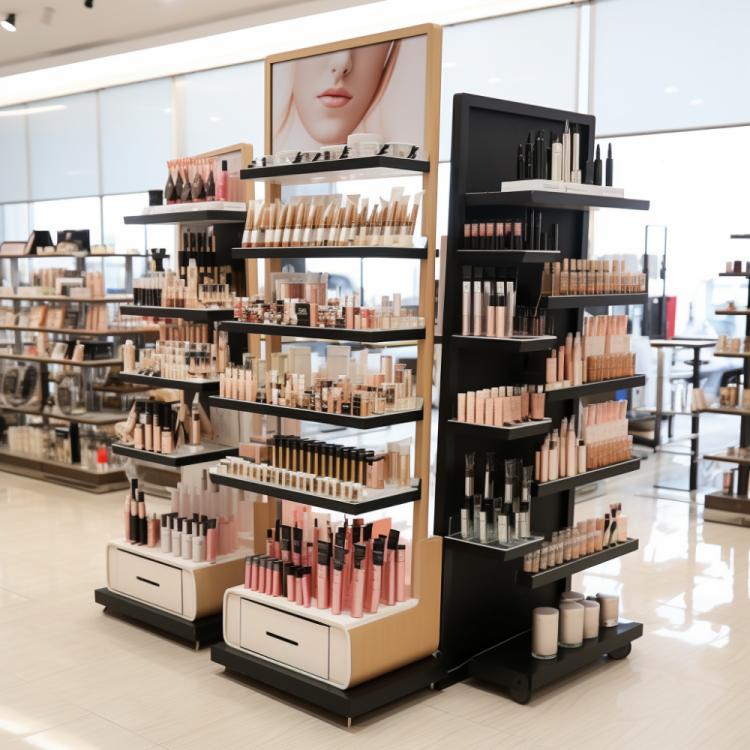
The material depends on the duration of use.
Not every floor display is made from the same material. We most commonly use:
- cardboard for short-term campaigns,
- MDF and furniture boards for permanent displays,
- metal for heavy products,
- wood for premium brands,
- acrylic for communication elements or organizers.
The choice of material affects not only the appearance but also the durability, logistics, and cost of the entire implementation.
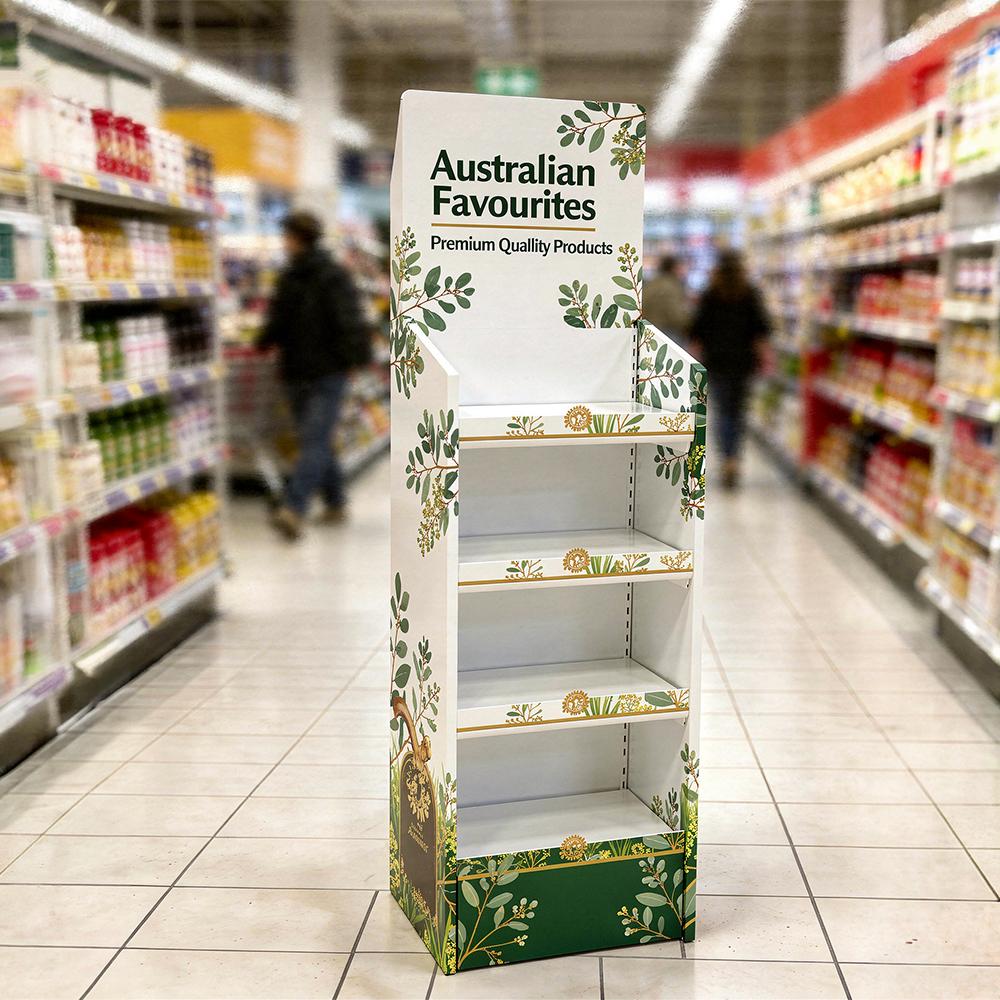
The structure must stand the store’s daily operations.
The floor display should be resistant to:
- A floor display is subjected to heavy use every day. It should be resistant to:
- moving by staff,
- contact with shopping carts,
- heavy customer traffic.
That is why, already at the design stage, we analyze:
- weight distribution,
- the number of support points,
- structural stability,
- leveling capability,
- installation method.
Thanks to this, the display remains secure even under full load..
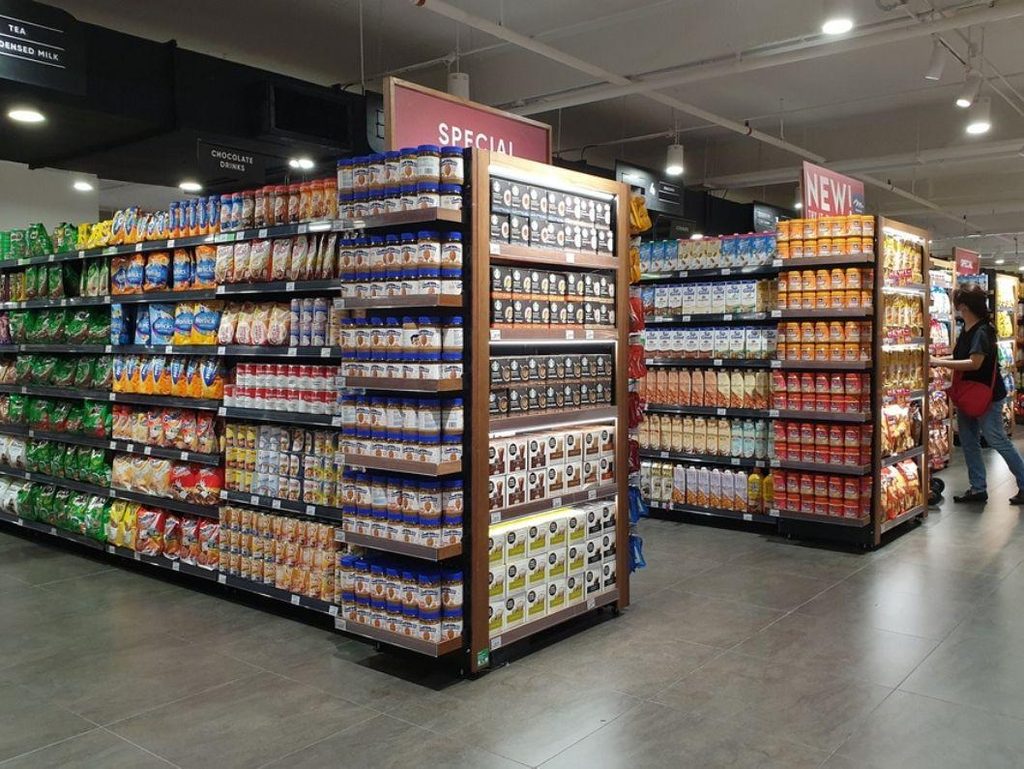
Location often determines effectiveness.
The same display unit placed in two different locations can achieve vastly different sales results. The best-performing locations include:
- gondola ends,
- main traffic routes,
- store entrances,
- seasonal zones,
- The area around the ticket counters.
That is why it is always worth analyzing the display design in conjunction with the store layout.
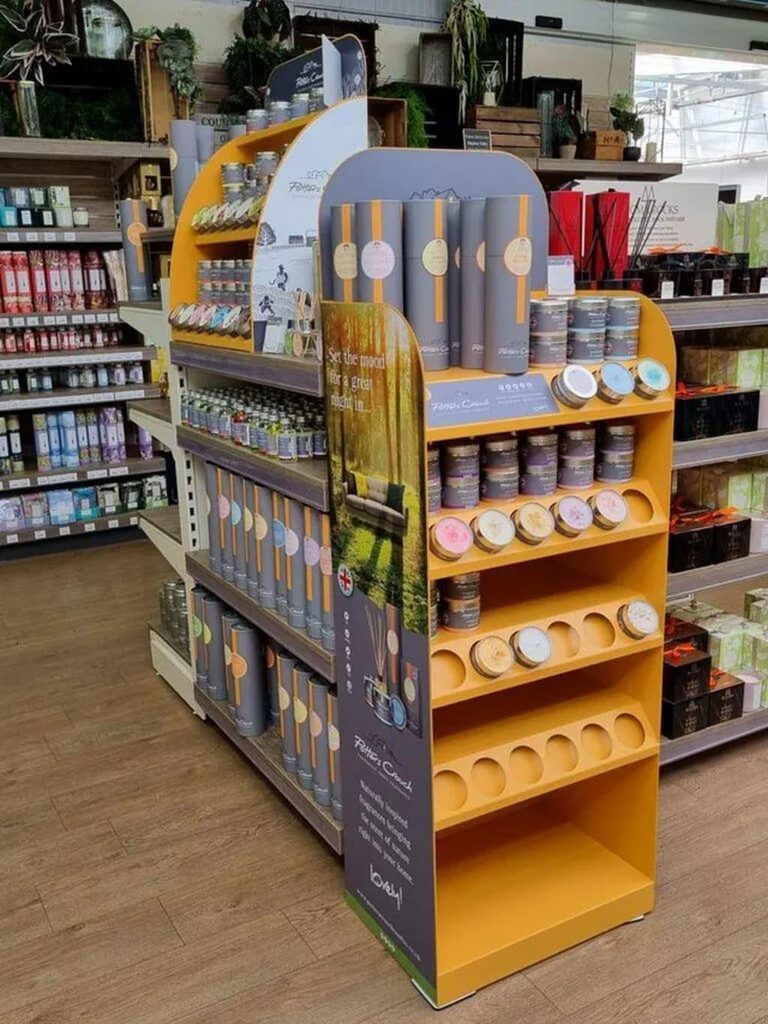
A good display sells even when it is partially empty.
This is one of the most frequently overlooked elements of design. A display should look good not only on the day of delivery; it should also retain its attractive appearance even after some of the products have already been sold. That is why we design:
- the appropriate shelf height,
- product dividers,
- visibility of the communication even with lower stock levels,
- Easy stock replenishment system.
Such solutions extend the effectiveness of the display and reduce the workload for store staff.
Summary
A good floor display doesn’t start with the choice of material. It begins with an understanding of the product, the display location, and customer behavior. Only then can the appropriate structure, dimensions, and production technology be selected. That is precisely why two similar displays can yield vastly different sales results. At UC POS, we design and manufacture POS displays that combine aesthetics with functionality. Each project is developed with consideration for actual store conditions, product display methods, and the comfort of both customers and staff. Thanks to this, the display not only looks good but, above all, effectively boosts sales.
Are you planning a floor display?
Send us details regarding the product, number of SKUs, and display location. We will design a floor display tailored to your brand, store environment, and budget. We will develop a complete, production-ready concept, select the appropriate materials, and propose solutions suited to how the display will be used.
At UC POS, we design, prototype, and manufacture POS displays made from metal, wood, MDF, acrylic, plastics, and cardboard. Right from the conceptual stage, we analyze ergonomics, structural stability, and in-store placement to ensure the display is safe, durable, and effective at driving sales.